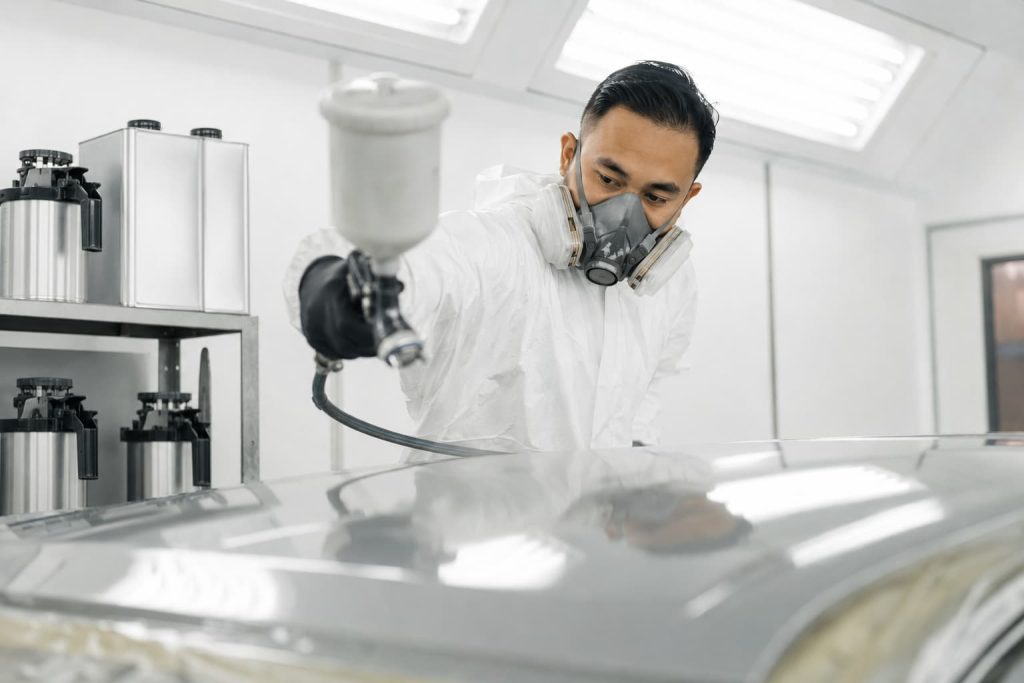
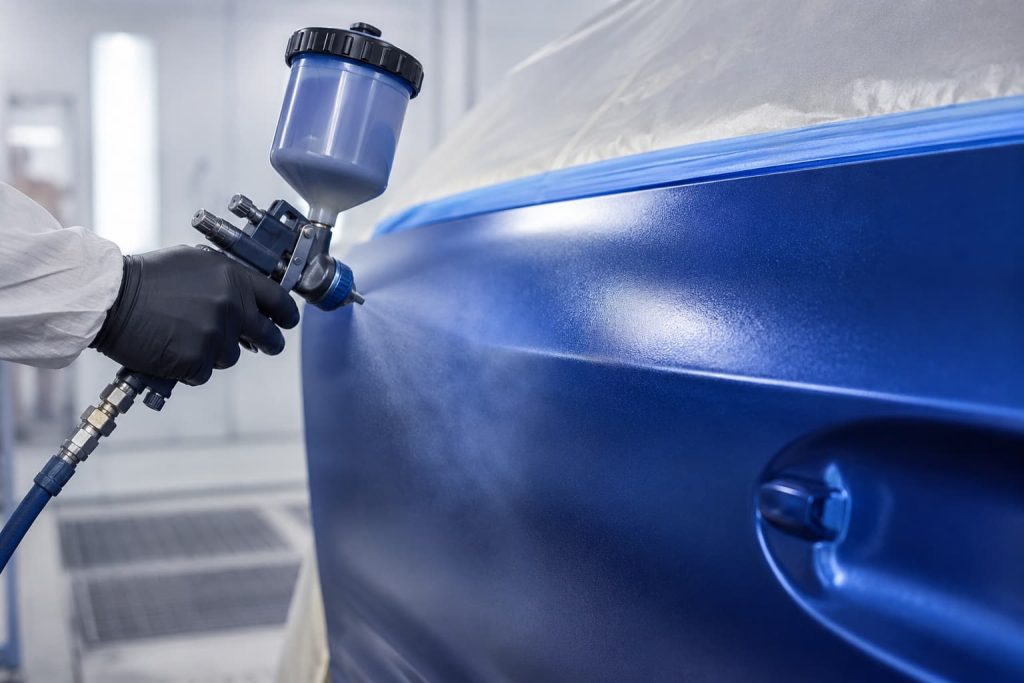
Running a workshop in Malaysia means dealing with conditions that most global product specs weren’t designed for. The heat doesn’t let up, humidity sits high year-round, and customers expect a mirror-level finish every single time. Choosing the wrong clear coat doesn’t just affect quality. It hits your turnaround time, your rework rate, and eventually, your reputation.
The problem is there’s no shortage of options on the market. Walk into any automotive supply shop and you’ll find products at wildly different price points, all claiming brilliant gloss and long-lasting durability. So how do you cut through all that and actually pick the right one for your workshop?
Here are five things that genuinely matter.
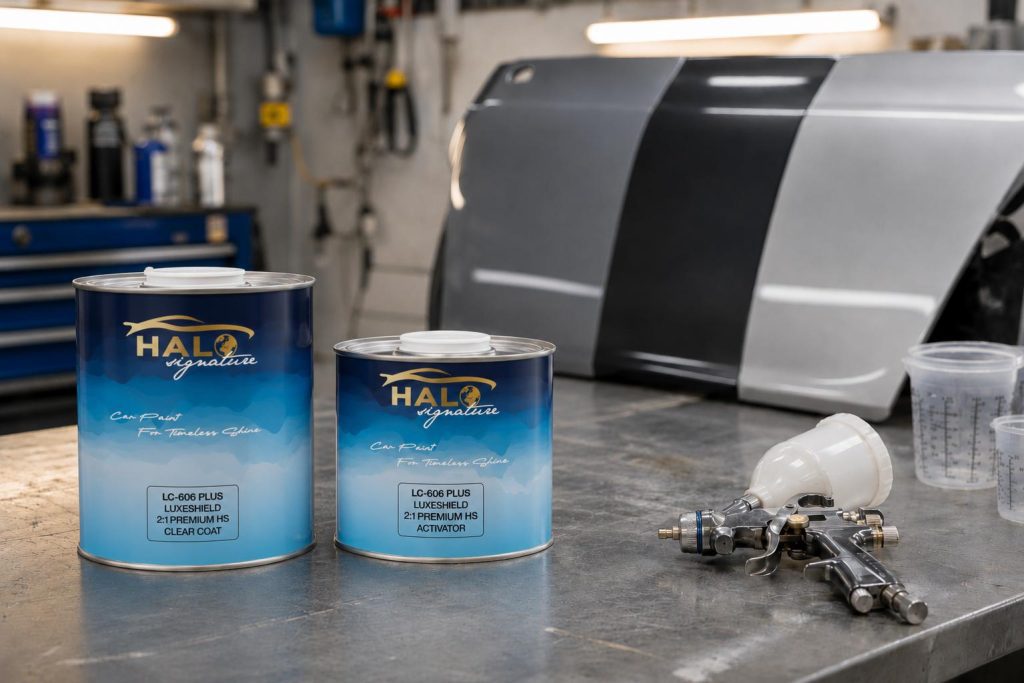
1. UV and Weather Resistance Built for the Malaysian Climate
Malaysia’s climate is relentless. Intense UV exposure, daily heat cycles, and humidity that rarely drops below 70% will degrade a clear coat that wasn’t engineered for it. Yellowing, hazing, and early peeling are the most common failure points for products formulated to general automotive specs rather than tropical conditions.
When evaluating a product, look beyond the brochure claims and check whether the formulation was actually designed for Southeast Asian use. A clear coat that performs well in a European market doesn’t automatically hold up on a Malaysian parking lot at 2pm in July. Moisture-resistant curing and strong UV inhibitors are what you want. Your customers’ resprays need to hold that finish for years, not start fading before their next service.
2. Drying and Processing Time
In a busy workshop, time is one of the tightest resources you manage. A clear coat that takes too long to flash between coats, or too long to cure before buffing, directly affects how many jobs you can complete in a day.
Flash Time vs. Full Cure Time
These are two different measurements and it’s worth understanding both before committing to a product. Flash time is the waiting period between coats. Full cure time is how long before the panel can be safely polished, buffed, or handed back to the customer. A product might advertise a short flash time but have a long cure window, which can be a real problem if your workflow involves same-day delivery on respray jobs.
How Processing Speed Affects Your Workshop Throughput
Cutting your spray processing time by even 20 to 30 percent adds up significantly across a full month of work. Our HALO 2K Clear Coat is formulated to reduce spray processing time by approximately 30% compared to standard products. That’s a meaningful difference when you’re running multiple bays and back-to-back bookings.
3. Gloss Level and Finish Quality
A quality clear coat needs to do two things well: protect the underlying paint and make it look like glass. If your clear is dulling the basecoat beneath it, or leaving noticeable texture after buffing, that’s a problem regardless of what the label says.
Before committing to any new product, spray a test panel first. Evaluate the gloss under different lighting conditions: direct sunlight, your booth lighting, and natural shade. Look for orange peel, cloudiness, or uneven sheen right after application. Issues at this stage are a reliable predictor of problems at scale.
Good levelling properties matter too. A quality clear coat flows out smoothly after application and self-levels before it starts to tack. This means less polishing time after cure and less mechanical abrasion on the paint system overall, which is better for the finish and better for your team’s time.
4. Compatibility With Your Existing Paint System
Clear coats don’t perform in isolation. They’re part of a layered system: primer, basecoat, clear. If any of those layers aren’t compatible with each other, you risk adhesion failure, solvent pop, or lifting. These problems don’t always show up immediately but they create costly rework later, often after the car has already left your shop.
This is why running a unified paint system from a single supplier makes sense for most workshops. When your primer coats, basecoats, and 2K clear coat are all engineered to work together, you take the compatibility guesswork out of the equation. Mixing brands across layers introduces variables that can be genuinely difficult to diagnose when something goes wrong months down the line.
If you’re currently running a mixed-supplier setup, do controlled test panels before committing to any new product combination, especially across primer and clear.
5. Real Cost Efficiency, Not Just Price Per Litre
Cheap clear coats exist. Some of them are usable. But if a low-cost product is quietly increasing your rework rate, the savings don’t add up. What you’re actually looking for is cost efficiency across the full job: coverage rate, how far a litre gets you, rework frequency, and how well the finish holds before customers come back with complaints.
Two-component (2K) clear coats do cost more upfront than 1K options, but the durability difference is real. If you haven’t compared both properly, our article on 2K vs 1K clear coat breaks down exactly what you’re trading off between the two.
Batch-to-batch consistency is another factor worth thinking about. A product manufactured under ISO 9001:2015 certification with in-house R&D means you’re not guessing whether this month’s drum will perform the same as last month’s. Consistency matters when you’re building a reputation on your finish quality.
How To Properly Trial a New Clear Coat Before You Commit
Don’t test a new clear coat on a customer’s car. Use this process instead:
- Get a scrap panel or test bonnet
- Apply your standard primer and basecoat underneath
- Spray the clear at the manufacturer’s recommended mix ratio and flash intervals
- Buff and inspect after 24 hours: gloss level, surface texture, cure hardness
- Leave the panel outdoors for a week and check for early signs of UV or moisture response
A product that passes this gives you a far more reliable basis for making the switch than spec sheets alone.
Choosing the Right Automotive Clear Coat for Your Workshop
The best clear coat for a Malaysian workshop checks all five boxes: tropical climate durability, processing speed, finish quality, system compatibility, and genuine cost efficiency. No single spec number tells the whole story, and a product that scores well on one but poorly on the rest will show its weaknesses over time.
If you’re looking for a 2K clear coat built specifically for local conditions, our HALO 2K Clear Coat is formulated for exactly that. Designed in Malaysia, backed by ISO certification, and part of a complete paint system that runs from primer through to topcoat.
New to 2K products and want to understand how they work before making a decision? Our guide on understanding 2K clear coat is a good starting point.