What Is Basecoat in Car Paint? Role, Types, and Application

understanding automotive basecoat

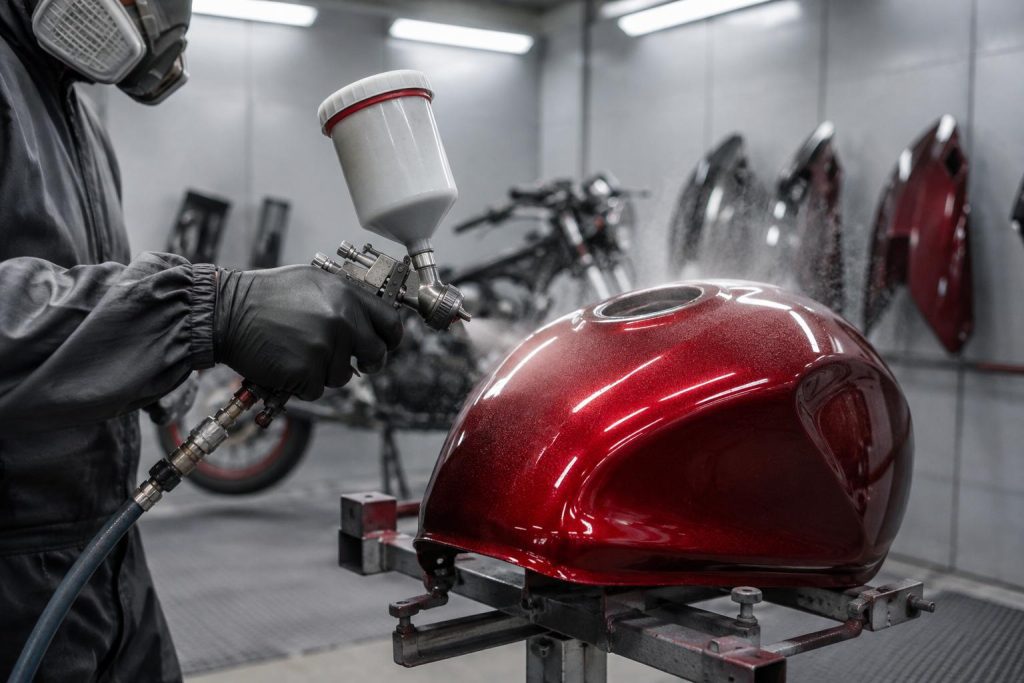
When you look at a freshly resprayed car and admire the colour, you’re looking at the basecoat. It’s the layer that carries the colour, the depth, and the visual character of the finish. Not the primer underneath it, and not the clear coat on top. The basecoat is where all the colour work happens.

If you’re a workshop owner, a technician, or just someone who wants to understand what actually goes into a professional paint job, this article breaks down what basecoat is, the different types you’ll encounter in the industry, and how it gets applied properly.

understanding automotive basecoat

What Basecoat Actually Does in a Car Paint System

Basecoat is the colour layer in a modern automotive paint system. It sits between the primer (which prepares the surface) and the clear coat (which protects and adds gloss). On its own, basecoat has very little surface protection. It’s not designed to be tough. Its job is colour delivery, and it does that very well.

This is why you’ll almost never see a bare basecoat finish in professional work. It needs a clear coat on top to protect it from UV rays, abrasion, humidity, and everything else Malaysian weather throws at a vehicle. The two work as a system, and skipping either one compromises the whole job.

If you want a broader picture of how basecoat fits into the full paint system alongside primer and clear coat, our guide on the types of automotive paints used in professional car respraying covers the complete layering process.

Understanding The Types of Basecoat

Not all basecoats are the same. The type you choose affects colour accuracy, application behaviour, drying time, and overall finish quality. Here are the main types used in professional automotive refinishing:

1. Solvent-Based Basecoat

Solvent-based (also called conventional) basecoats have been the industry standard for decades, and they’re still widely used across Malaysian workshops. They deliver excellent colour depth and opacity, they’re forgiving to spray, and they dry relatively fast.

The main trade-off is VOC (volatile organic compound) content. Solvent-based products release more emissions during application, which is why spray booth ventilation matters. Despite tightening environmental standards in some markets, solvent-based basecoats remain the practical choice for most professional bodyshops in this region due to performance and cost.

2. Water-Based Basecoat

Water-based basecoats use water as the primary carrier instead of solvents. They’re cleaner environmentally and produce lower VOC emissions. Many car manufacturers now specify water-based paints for their OEM production lines.

For refinishing work, water-based products require a bit more care. They’re sensitive to humidity and temperature during application, and they typically need an infrared dryer or a well-ventilated booth to flash off properly. In tropical conditions like Malaysia’s, these environmental factors matter more than they would in a temperate climate.

We’ve covered the differences between solvent-based and water-based car paint in a separate article if you want a deeper comparison before deciding which direction suits your workshop.

3. Metallic and Pearl Basecoat

These aren’t separate categories by chemistry, but they’re worth distinguishing by visual effect. Metallic basecoats contain aluminium flake particles that reflect light and give the finish its characteristic shimmer. Pearl basecoats use mica or ceramic flakes that create a colour shift depending on the viewing angle.

Spraying these correctly takes more skill. Flake orientation is affected by spray distance, gun pressure, and the number of coats applied. Get it wrong and you’ll see banding, shadowing, or inconsistent flake alignment. Proper technique and consistent passes are everything with metallic and pearl finishes.

4. Solid Colour Basecoat

Solid colours, think white, black, red, or any plain single-tone, don’t contain metallic or pearl flakes. They’re generally easier to apply than effect finishes and are more forgiving of minor technique variations. That said, colour accuracy still matters enormously, especially on partial panel repairs where the new coat needs to match the surrounding paintwork.

What Goes Into a Good Basecoat Product?

The quality of a basecoat comes down to a few things: pigment quality, binder resin, and how the product is formulated for the conditions it’ll be used in. A well-formulated basecoat gives you:

  • Consistent colour accuracy batch to batch
  • Good hiding power, meaning fewer coats to reach full opacity
  • Compatibility with the primers and clear coats in your system
  • Stable performance in high humidity and heat conditions

At LENC Paints, our HALO basecoat range is developed with in-house R&D specifically for tropical conditions. Colour accuracy is matched against an extensive catalogue, and the formulation is designed to work seamlessly with our 2K clear coats and primer coats, so the whole system performs as intended from the ground up.

How Basecoat Is Applied in a Professional Respray

Here’s how a proper basecoat application typically goes:

1. Surface Preparation Comes First

Basecoat needs a prepared surface to adhere to correctly. In a full respray, this means the panels are sanded, cleaned, and primed before the basecoat ever goes on. Any contamination or unsanded edges will show up in the finish. There are no shortcuts in prep.

2. Mixing and Reduction

Basecoat is almost always mixed with a reducer or thinner to bring it to the right viscosity for spraying. The ratio depends on the product spec sheet, the spray gun you’re using, and to some degree the ambient temperature. Using the right automotive-grade thinner makes a real difference in how the paint lays and flows off the gun.

3. Spraying Technique

Basecoat is typically applied in two to three coats, with a flash-off period between each. Flash-off just means you wait for the solvent or water to evaporate before applying the next layer. Rushing this creates solvent trapping, which causes adhesion problems and can result in blistering down the line.

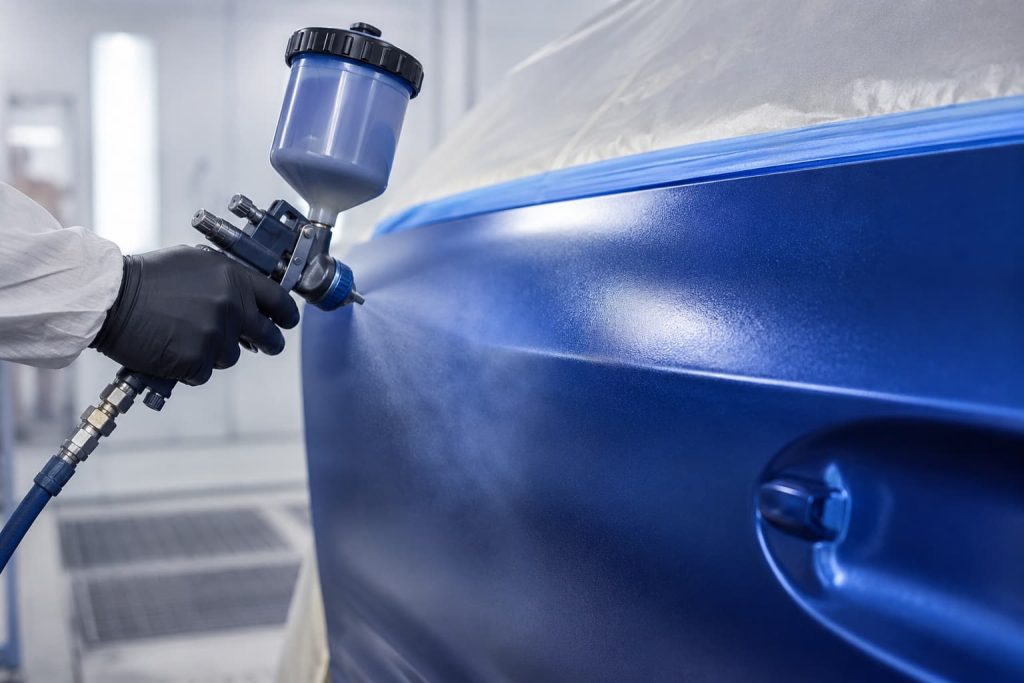
Keep consistent spray distance (usually around 15 to 20 cm), overlap each pass by about 50%, and maintain a steady gun speed. With metallic or pearl finishes, a final mist coat can help settle the flake orientation evenly.

4. Clear Coat Goes On After

Once the basecoat has fully flashed off and you’re happy with the colour coverage, the 2K clear coat goes on. This is what gives the finish its depth, gloss, and long-term protection. Basecoat without clear coat is incomplete, full stop.

Common Basecoat Problems and What Causes Them

Even experienced painters run into issues. Here are a few of the more common ones:

ProblemLikely Cause
Poor hiding power (patchy colour)Too few coats, wrong reduction ratio, or low-quality pigment
Metallic bandingInconsistent gun speed or spray distance
Solvent poppingInsufficient flash-off time between coats
Colour mismatch on panel repairsIncorrect colour code, poor tinting, or wrong product batch
Adhesion failureContaminated surface or incompatible primer system

Most of these come down to either product quality or application process. Using a well-formulated basecoat from a reputable manufacturer and following the correct application procedure eliminates the majority of them.

Wrapping It Up

Basecoat is one layer in a system, and the system only works when every layer does its job. Primer gives the basecoat something to grip. Basecoat delivers the colour. Clear coat protects everything. Skip or shortcut any of these, and the whole thing underperforms.

If you’re a workshop thinking about the products you use, it’s worth evaluating not just basecoat in isolation but the full system compatibility. Products formulated to work together give you more predictable results than mixing brands across layers.

For a full walkthrough of how all of this fits together in an actual job, the article on what is a car respray gives you the complete process from panel prep to final coat.

Whether you’re sourcing basecoat for a single workshop or building out a distribution network, we’re happy to talk through your needs. Check out our range of basecoats or reach out to us today!

Bengkel Cat Kereta Guna Cat Apa? 3 Jenis Cat yang Selalu Dipakai Pro

bengkel cat kereta malaysia guna cat apa

Kalau anda pernah tengok proses kerja di bengkel cat kereta, mungkin anda perasan teknisi tu bukan sekadar ambil satu tin cat dan terus sembur. Ada proses, ada lapisan, dan ada jenis cat yang berbeza untuk setiap peringkat kerja.

Inilah yang membezakan bengkel profesional dengan kerja “cucuk” yang tidak tahan lama. Pro guna sistem cat yang betul. Dan sistem tu melibatkan sekurang-kurangnya tiga jenis cat utama yang masing-masing ada fungsi tersendiri.

Kalau anda nak faham kenapa cat bengkel mahal sedikit berbanding cat biasa, atau sekadar ingin tahu apa yang sebenarnya digunakan dalam proses semburan penuh, artikel ini adalah untuk anda.

bengkel cat kereta malaysia guna cat apa

1. Cat Primer: Asas yang Tentukan Segalanya

Sebelum sebarang warna disembur, permukaan kereta perlu disediakan dengan betul. Di sinilah cat primer memainkan peranan penting, dan ia sering jadi lapisan yang paling dipandang ringan oleh bengkel yang kurang berpengalaman.

Apa Fungsi Cat Primer?

Cat primer bukan sekadar “lapisan pertama”. Ia ada beberapa fungsi utama:

  • Memastikan cat warna melekat dengan kuat pada permukaan logam atau filler badan
  • Mengisi permukaan yang tidak rata, calar halus, atau kesan tampalan
  • Melindungi permukaan logam daripada karat sebelum dicat semula
  • Memberi asas warna yang seragam supaya warna lapisan atas kelihatan betul dan konsisten

Tanpa primer yang baik, cat warna yang anda sembur selepas tu mungkin tidak melekat dengan sempurna. Atau hasilnya tidak sekata walaupun warna dipilih tepat. Dalam jangka masa panjang, ini boleh menyebabkan cat terangkat, gelembung, atau habis dalam masa yang lebih cepat daripada sepatutnya.

Jenis Primer yang Biasa Digunakan Bengkel Pro

Tidak semua primer sama. Bergantung pada jenis kerja dan keadaan panel, bengkel profesional akan pilih primer yang berbeza:

  • Epoxy primer untuk perlindungan karat yang lebih baik, terutama pada panel yang telah diketuk atau ada karat awal
  • Polyester primer surfacer untuk mengisi permukaan yang dalam atau tidak rata selepas tampalan badan
  • 2K primer untuk kerja yang memerlukan adhesion dan filling dalam masa yang sama

Untuk bengkel yang nak keputusan konsisten dan meminimumkan kerja baiki semula, primer coat berkualiti adalah pelaburan yang berbaloi. Jimat pada primer sering bermaksud bayar dua kali pada kerja semula.

2. Basecoat: Lapisan Warna yang Memberi Identiti Kereta

Selepas primer kering dan di-sand dengan betul, barulah cat warna atau basecoat disembur. Ini lapisan yang kelihatan dari luar dan yang memberi kereta tu warnanya. Ia juga lapisan yang paling mudah nampak kalau tidak disembur dengan betul.

Apa Itu Basecoat dan Kenapa Ia Tidak Glossy?

Ini soalan biasa yang sering tanya. Basecoat adalah lapisan warna utama dalam sistem cat dua atau tiga peringkat. Ia tidak mengandungi lacquer atau pelindung, jadi ia tidak glossy dengan sendirinya selepas disembur. Permukaan akan kelihatan matte atau doff selepas basecoat kering.

Kilat tu datang dari clear coat yang disembur di atas. Sebab itulah basecoat perlu disembur dengan sempurna dari segi coverage dan keseragaman warna. Lepas clear coat diaplikasi, semua ketidakseragaman akan kelihatan dengan lebih ketara di bawah cahaya.

Kenapa Color Matching Adalah Kemahiran Tersendiri

Ini satu cabaran besar dalam kerja cat kereta, terutama untuk kerja baiki separa atau satu panel sahaja. Warna kereta yang sama boleh kelihatan berbeza bergantung pada umur cat asal, jenama cat yang digunakan sebelum ni, dan cara cahaya memantul pada sudut yang berbeza.

Bengkel yang serius akan guna sistem basecoat yang ada katalog warna yang luas dan sistem pencocokan warna yang tepat. Ini bukan sekadar pilih warna yang “lebih kurang sama” tapi cari padanan yang betul-betul tepat supaya panel yang dicat tidak kelihatan berbeza daripada panel sebelahnya.

Nak tahu lebih lanjut tentang jenis-jenis cat yang ada di pasaran? Artikel kami tentang jenis cat automotif boleh jadi rujukan berguna.

3. Clear Coat: Pelindung Terakhir yang Tentukan Hasil Akhir

Ini lapisan ketiga dan yang paling kritikal dari segi penampilan akhir dan daya tahan jangka panjang. Clear coat adalah cat telus yang disembur di atas basecoat untuk memberi kilat, perlindungi warna daripada UV, dan tingkatkan ketahanan permukaan kereta.

Kenapa Clear Coat Penting untuk Iklim Malaysia

Malaysia ada iklim yang agak keras untuk cat kereta. UV yang kuat sepanjang tahun, kelembapan tinggi, dan panas yang tidak banyak berubah boleh menjejaskan clear coat yang tidak diformulasi untuk cuaca tropika. Clear coat yang tidak sesuai atau berkualiti rendah boleh menjadi kekuningan, kabur, atau mula pecah dalam masa dua hingga tiga tahun sahaja.

Sebab itulah pemilihan clear coat bukan sekadar soal harga per liter, tapi soal berapa lama kerja anda tahan. Pelanggan yang keretanya menanggalkan clear coat dalam masa dua tahun adalah pelanggan yang tidak akan balik ke bengkel anda.

Perbezaan 1K dan 2K Clear Coat

Satu perkara yang wajib difahami setiap teknisi bengkel adalah perbezaan antara 1K dan 2K clear coat.

 1K Clear Coat2K Clear Coat
KomponenSatu komponen, sedia semburDua komponen, perlu dicampur dengan hardener
KetahananLebih rendahLebih tinggi
Kilat akhirSederhanaSangat baik
Masa prosesLebih cepat tapi hasil lemahLebih terkawal dan konsisten
Kegunaan biasaTouch-up kecilSemburan penuh profesional

Untuk kerja bengkel yang serius, 2K clear coat adalah pilihan standard. Ketahanannya lebih baik, dan hasilnya lebih konsisten dari satu job ke job yang lain. Kalau anda belum familiar dengan perbezaan keduanya, artikel kami tentang 2K vs 1K clear coat boleh bantu jelaskan lebih lanjut.

Kenapa Ketiga-Tiga Jenis Cat Ini Perlu Digunakan Bersama

Soalan yang sering tanya: “Boleh tak terus guna cat warna tanpa primer?” atau “Boleh tak skip clear coat untuk jimat masa?”

Boleh. Tapi risikonya tinggi.

Setiap lapisan dalam sistem cat ada fungsi yang tidak boleh digantikan oleh lapisan lain. Primer pastikan adhesion. Basecoat bagi warna. Clear coat bagi perlindungan dan kilat. Kalau salah satu dilangkau, sistem tu tidak berfungsi sepenuhnya, dan hasilnya akan kelihatan dalam tempoh masa yang lebih cepat daripada yang pelanggan jangkakan.

Yang sama pentingnya, ketiga-tiga produk ini perlu serasi antara satu sama lain. Itulah sebabnya bengkel pro biasanya guna sistem cat dari satu pembekal, bukan campuran pelbagai jenama untuk setiap lapisan. Bila primer, basecoat, dan clear coat diformulasi untuk bekerja bersama, risiko masalah seperti adhesion failure, solvent pop, atau cat terangkat berkurangan dengan ketara.

Artikel kami tentang cat kereta Malaysia juga ada perbincangan lanjut pasal kenapa pemilihan cat yang betul penting dalam konteks pasaran tempatan.

Sistem Cat Pro untuk Bengkel Malaysia

Sistem cat HALO kami direka khas untuk industri automotive refinishing di Malaysia. Dari primer hingga basecoat hingga 2K clear coat, setiap produk diformulasi untuk bekerja bersama dan tahan dalam iklim tropika. Lebih dari 500 bengkel di Malaysia sudah guna produk HALO dan AURORA kami dalam kerja harian mereka.

Kalau anda sedang pertimbangkan untuk tukar ke sistem cat yang lebih konsisten dan boleh dipercayai, atau nak tahu lebih lanjut tentang perbezaan antara cat berasaskan pelarut dan cat berasaskan air, kami ada sumber yang boleh bantu anda buat keputusan yang lebih yakin.

2K Clear Coat vs 1K Clear Coat: What Are The Differences?

2k clear coat vs 1k clear coat automotive

If you’ve spent any time around automotive refinishing, you’ve probably come across the terms 1K and 2K clear coat. They sound similar, but the difference between 1K and 2K paint matters a lot, especially when you’re deciding what goes on top of a freshly sprayed panel. At LENC Paints, we work closely with workshops and car enthusiasts across Malaysia, and this is one of the questions we get asked most often. So let’s break it down properly.

What Is 1K Clear Coat?

1K simply means single-component. There’s no mixing involved. You open the product, load it into your spray gun (or use it straight from an aerosol can), and you’re ready to go.

1K clear coat dries through solvent evaporation, meaning the solvents in the product escape into the air and leave behind a hardened film. It’s straightforward to use, which makes it a popular choice for DIY touch-ups, minor panel repairs, and situations where speed and convenience matter more than long-term durability.

That said, 1K has its limitations. The finish it produces is softer and more vulnerable to scratches, UV exposure, and chemical contact compared to its 2K counterpart. For anything beyond a quick spot repair, it starts to fall short.

What Is 2K Clear Coat?

2K means two-component. Before spraying, you mix the clear coat base with a hardener (also called an activator) at a specific ratio, typically 2:1 or 4:1 depending on the product. This isn’t just a procedural step. It triggers a chemical reaction called polyisocyanate cross-linking, which is what gives 2K its superior strength and durability.

Unlike 1K, which simply dries, 2K actually cures. That distinction is important. Curing creates a much harder, more stable film that bonds tightly to the substrate beneath it. The result is a finish that holds up significantly better over time.

One thing to keep in mind: once you mix a 2K product, the clock starts ticking. Every 2K clear coat has a pot life, a window within which the mixed product must be used before it begins to gel and become unusable. Plan your job accordingly before you mix.

If you’re looking for a reliable 2K option, our HALO 2K Clear Coats are formulated specifically for the demands of professional automotive refinishing.

Key Differences Between 2K Clear Coat vs 1K Clear Coat

Here’s a straightforward comparison to help clarify where each product stands:

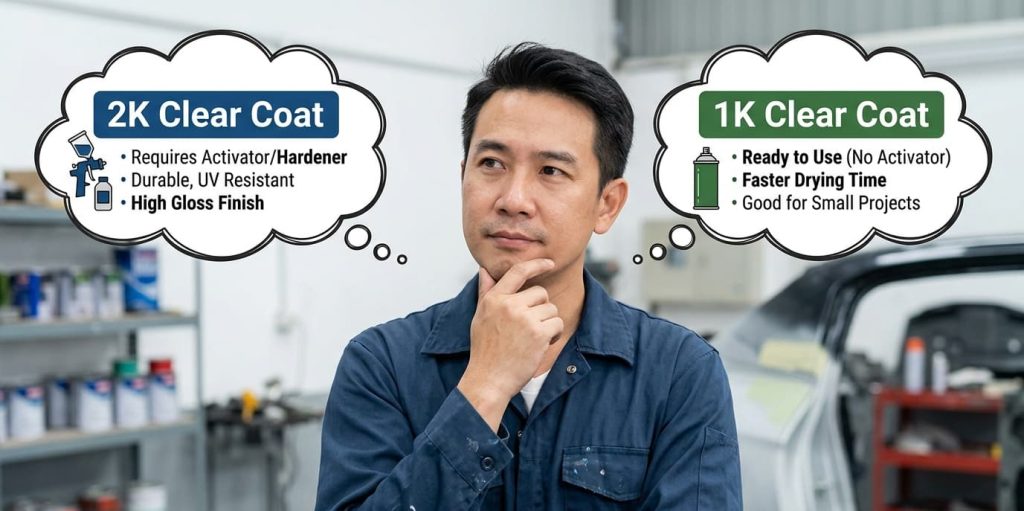
  • Mixing: 1K requires no mixing at all. 2K must be combined with a hardener at the correct ratio before use.
  • Durability: 2K is significantly harder once cured. It resists scratches, marring, and general wear far better than 1K.
  • Finish quality: 2K produces a deeper, more consistent gloss that holds its clarity over time. 1K finishes tend to look good initially but can dull faster.
  • Chemical resistance: 2K stands up well to petrol, brake fluid, and harsh cleaning agents. 1K is much more vulnerable to these.
  • Application: 1K is more forgiving, which makes it accessible for beginners. 2K requires proper spray equipment, good technique, and a controlled environment to get the best results.
  • Drying vs curing: 1K dries through evaporation. 2K cures through a chemical reaction. This is the core reason 2K outperforms 1K in almost every durability metric.
Feature1K Clear Coat2K Clear Coat
MixingNo mixing requiredMust be mixed with a hardener at the correct ratio
DurabilitySofter and less resistant to scratches and wearMuch harder once cured and highly resistant to scratches and wear
Finish QualityGood initial gloss but may dull fasterDeeper, more consistent gloss that lasts longer
Chemical ResistanceMore vulnerable to petrol, brake fluid, and harsh cleanersStrong resistance to petrol, brake fluid, and chemicals
ApplicationMore forgiving and beginner-friendlyRequires proper spray equipment and technique
Drying / CuringDries through evaporationCures through a chemical reaction

Which One Should You Use?

The honest answer is: it depends on the job.

Go with 1K Clear Coat if you’re doing a quick touch-up on a small area, a temporary fix before a proper respray, or you’re working in a setting without a spray booth. It’s also a reasonable choice for hobby projects where you’re not chasing a showroom-level finish.

Go with 2K Clear Coat if you’re doing a full panel repaint or a complete car respray, or if the finish needs to last. This is especially relevant in Malaysia, where our climate puts a real strain on paintwork. The combination of intense UV, high humidity, and heat accelerates paint degradation. A properly cured 2K clear coat handles these conditions far better than 1K ever will.

For workshop owners specifically, 2K is the professional standard. Customers paying for a quality respray deserve a finish that lasts, and 1K simply isn’t appropriate for that level of work. Pairing a good automotive basecoat with a quality 2K clear is the combination that delivers results you can stand behind.

A Quick Note on 2K Clear Coat Safety

This part is important and often overlooked. The hardeners used in 2K clear coats contain isocyanates, which are a known respiratory hazard. Breathing in isocyanate particles, even briefly and even in small amounts, can cause serious lung damage and trigger occupational asthma.

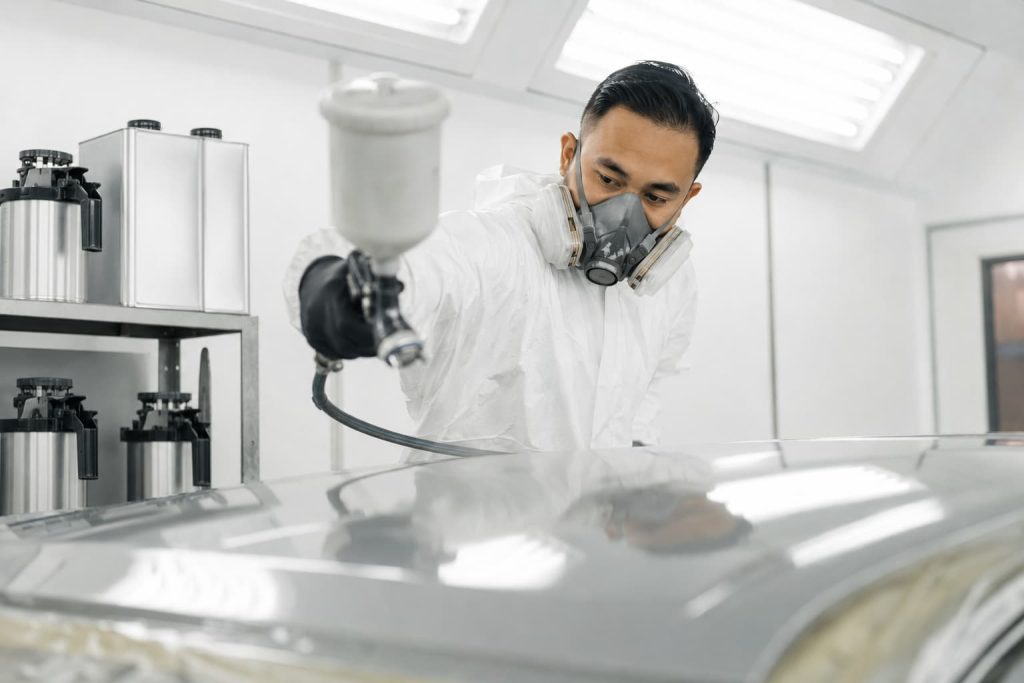
A standard dust mask is not sufficient protection. If you’re spraying 2K products, an air-fed respirator is non-negotiable. Proper ventilation is equally critical. For smaller Malaysian workshops that may not have a dedicated spray booth, this is something that genuinely needs to be planned for before you start any 2K job.

Cutting corners on PPE is never worth it.

Wrapping It Up

When it comes to 2K clear coat vs 1K, the right choice comes down to what the job actually demands. For serious refinishing work, especially in a professional workshop setting, 2K is the clear winner. It cures harder, lasts longer, and produces a better finish.

If you want to explore what’s available, browse our full range of automotive paint colors or check out our HALO 2K Clear Coat product today!