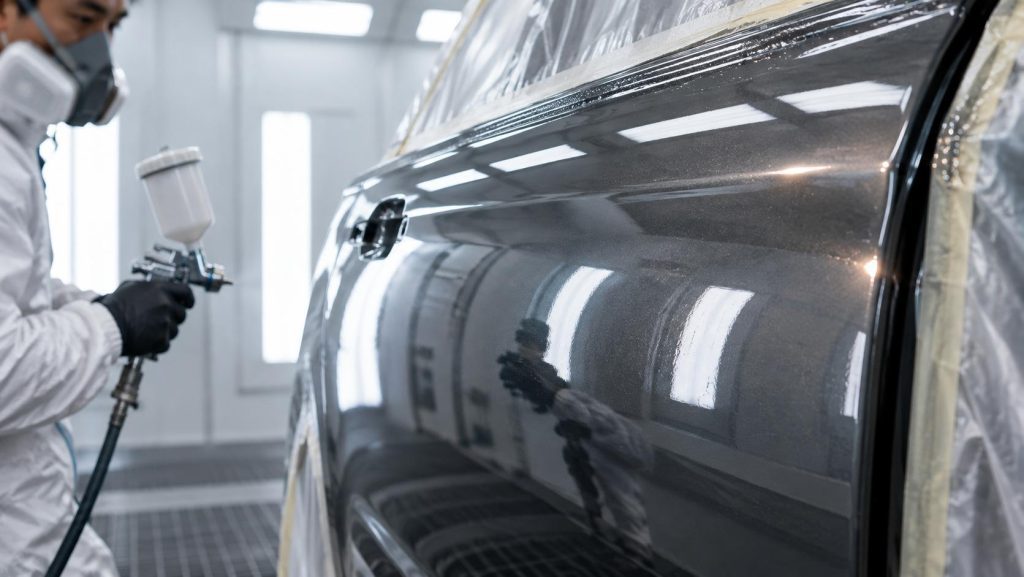
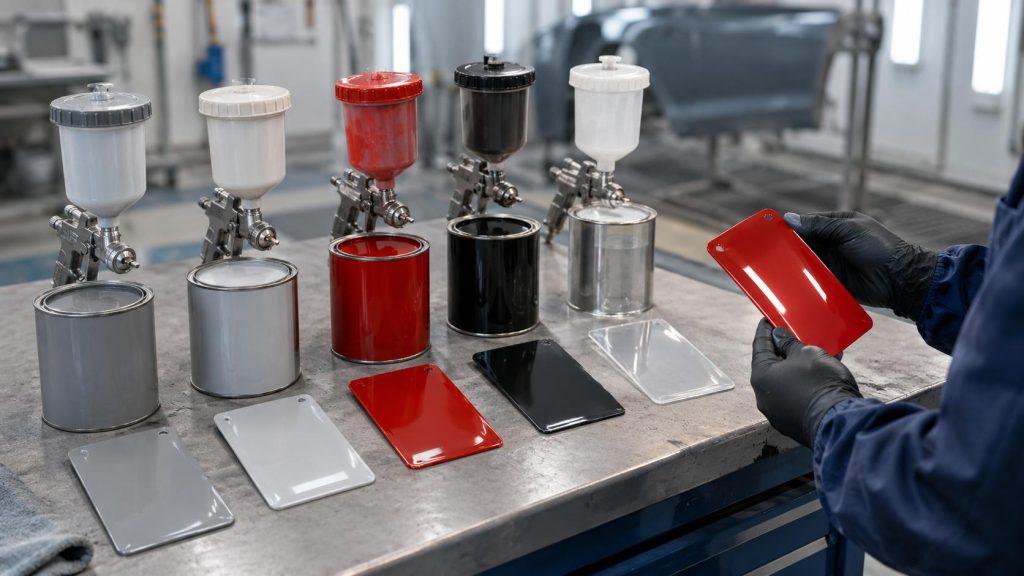
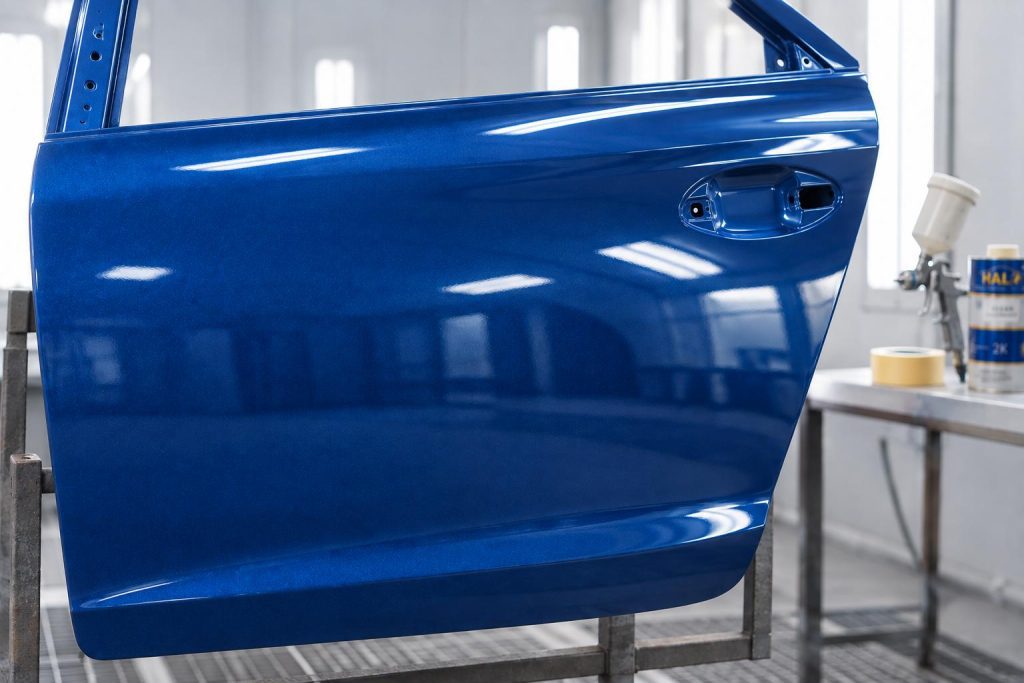
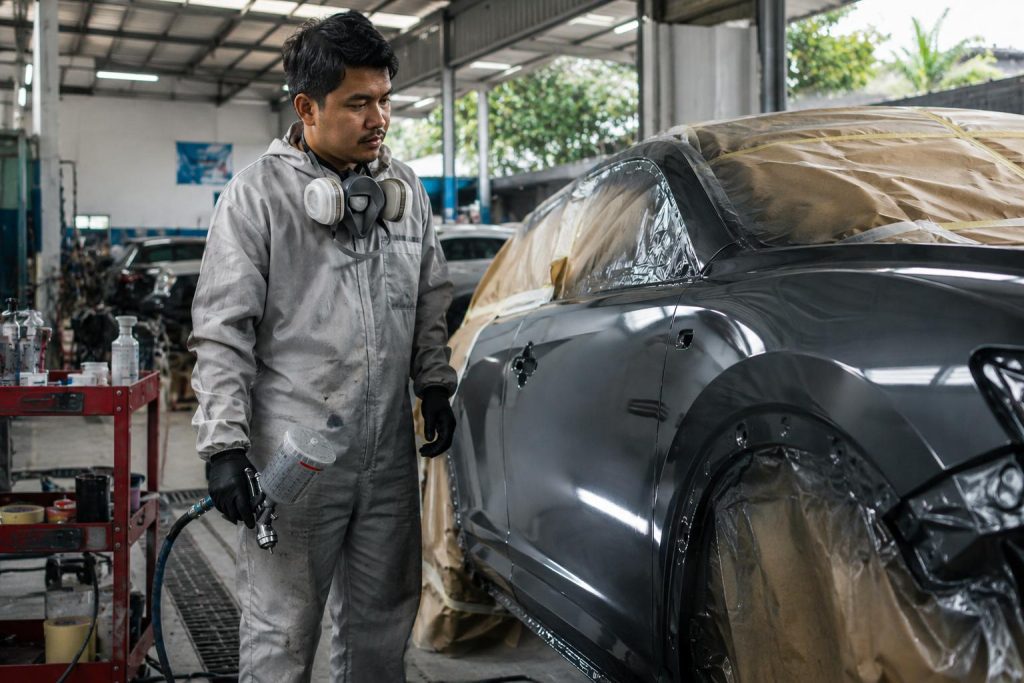
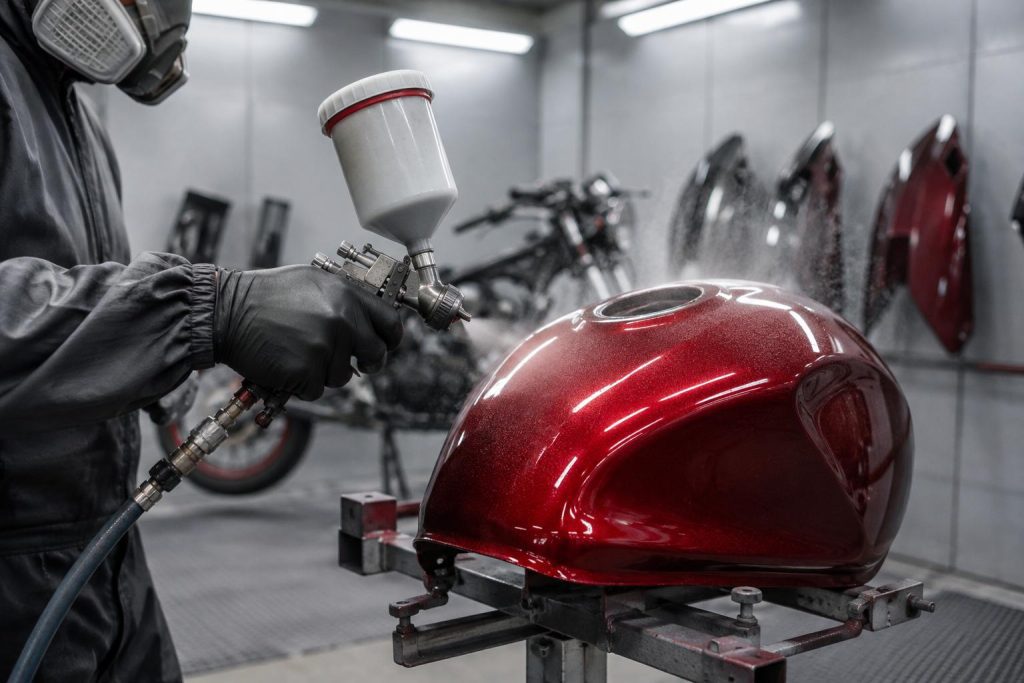
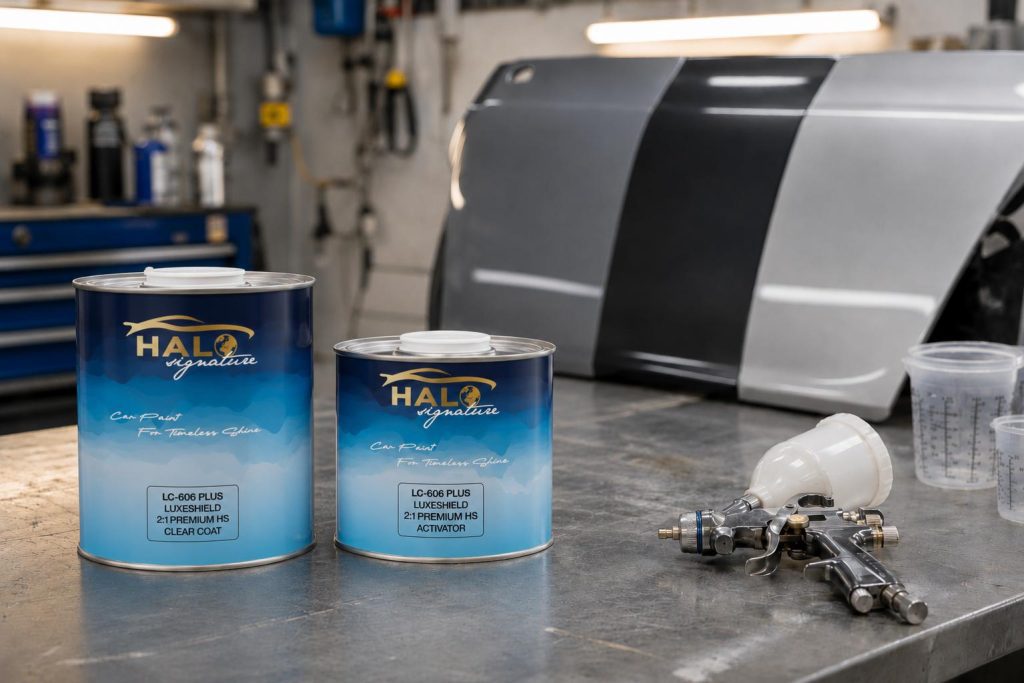
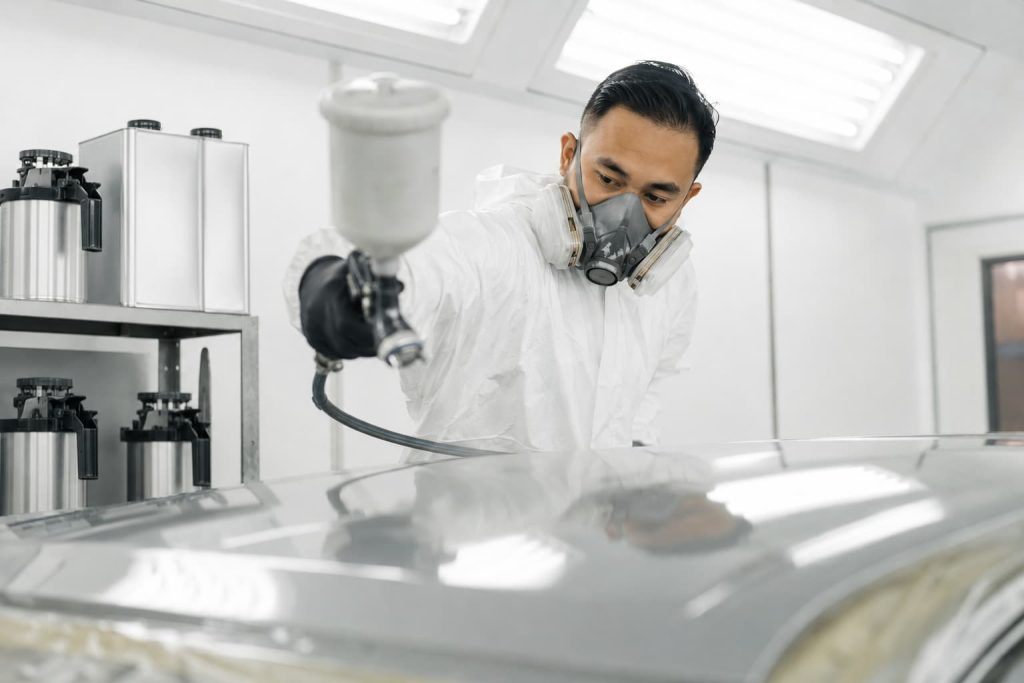
Kereta lecet atau calar memang menyakitkan hati, lagi-lagi kalau ia kereta kesayangan yang anda jaga elok-elok. Tapi bila sampai masa nak hantar kereta ke bengkel cat, ramai yang terus rasa was-was. Bengkel mana yang boleh dipercayai? Cat yang digunakan tu tahan lama ke tidak? Warna match ke tidak dengan warna asal kereta?
Kalau anda di kawasan Kuala Lumpur atau Selangor dan tengah cari bengkel cat kereta yang boleh diharap, kami dah senaraikan 5 pilihan yang biasa disebut oleh pemilik kereta di sinKesemua bengkel ini merupakan antara bengkel yang menggunakan produk HALO dalam operasi pengecatan dan refinishing mereka. Setiap satu ada kekuatan tersendiri, jadi baca dulu sebelum buat keputusan.
Kenapa Pemilihan Bengkel Cat Kereta Penting
Kerja cat kereta bukan sekadar sembur warna dan biar kering. Ada proses persediaan permukaan, pemilihan sistem cat yang sesuai, sampailah ke teknik penyemburan yang betul supaya hasil akhir nampak licin dan tahan lama. Bengkel yang tak reti buat kerja ni dengan teliti biasanya akan tinggalkan kesan seperti warna tak sekata, permukaan bergelombang, atau cat yang cepat pudar bila kena panas dan hujan.
Sebab itu, faktor macam pengalaman bengkel, kemudahan yang ada, dan jenis cat yang mereka gunakan semuanya penting sebelum anda serahkan kereta. Kalau anda nak faham lebih lanjut tentang proses ni, kami ada artikel berkaitan apa itu proses respray kereta yang boleh jadi rujukan tambahan.
5 Bengkel Cat Kereta Disyorkan Di Kuala Lumpur & Selangor
Berikut adalah senarai bengkel yang kami kongsikan berdasarkan pengalaman, kemudahan dan reputasi masing-masing.
1. Paint & Coat
Terletak di Sunway Damansara, Petaling Jaya, Paint & Coat sudah beroperasi sejak 2005 dan fokus kepada kerja cat, detailing serta perlindungan kereta seperti paint protection film. Yang menarik, bengkel ini ada proses inspection yang teliti sebelum kerja dimulakan, jadi pemilik kereta dapat tahu dengan jelas apa yang perlu dibaiki dahulu sebelum proses cat berjalan.
Dengan kemudahan 10-bay dan pasukan teknikal yang agak besar, bengkel ini sesuai untuk yang cari tempat dengan kapasiti kerja tinggi, terutama kalau anda tak nak tunggu lama untuk slot.
Alamat: 32, Jalan PJU 3/46, Sunway Damansara, 47810 Petaling Jaya, Selangor, Malaysia
No. Telefon: +60 11-6492 3688
2. Mak Autoworks Sdn Bhd
Berlokasi di Taman Sungai Besi, Kuala Lumpur, Mak Autoworks menawarkan servis pengecatan, panel beating, kerja mekanikal dan elektrikal, sehinggalah ke servis tunda 24 jam. Ini menjadikannya pilihan yang agak lengkap kalau kereta anda perlukan lebih daripada kerja cat sahaja.
Mak Autoworks turut disenaraikan sebagai PIAM Authorised Workshop dan panel workshop bagi beberapa penyedia insurans. Status panel semasa sebaiknya disahkan terus dengan bengkel atau syarikat insurans sebelum membuat tuntutanJadi kalau kereta anda terlibat dalam kemalangan dan perlu proses tuntutan insurans, bengkel ini boleh uruskan semuanya di satu tempat.
Alamat: 4, Jalan 14/108c, Taman Sungai Besi, 57100 Kuala Lumpur, Wilayah Persekutuan Kuala Lumpur, Malaysia
No. Telefon: +60 3-2303 9395
3. HH Spray Sdn Bhd
HH Spray di Kajang, Selangor sudah beroperasi lebih 20 tahun dan HH Spray mempunyai pengalaman luas dalam kerja respray dan sistem oven 2K. Selain kerja cat penuh dan panel respray, mereka turut menawarkan servis body kit modification, polishing dan pembaikan body.
Bengkel ini juga menawarkan warranty sehingga 6 tahun untuk sesetengah sistem cat mereka, satu petanda keyakinan mereka terhadap kualiti kerja yang dihasilkan.
Alamat: Lot 725C, Batu 12, Jalan Cheras, Taman Desa Baru, 43000 Kajang, Selangor, Malaysia
No. Telefon: +60 10-206 6556
4. Hong Y Auto Paint
Terletak di Bandar Pinggiran Subang, Shah Alam, Hong Y Auto Paint menjalankan kerja body repair, restoration dan pengecatan, serta merupakan antara bengkel yang menggunakan produk HALO untuk kerja refinishing.
Bengkel ini dikenali dengan pendekatan quote yang telus. Mereka cuba tawarkan harga berpatutan tanpa mengorbankan kualiti kerja atau structural integrity kereta anda, jadi anda tak perlu risau harga naik tiba-tiba di tengah proses kerja.
Alamat: 56, Jalan Bulan U5/168, Bandar Pinggiran Subang, 40150 Shah Alam, Selangor, Malaysia
No. Telefon: +60 13-766 4879
5. Autofix Garage Sdn Bhd
Autofix Garage berada di kawasan Chan Sow Lin, berhampiran Lebuhraya Sungai Besi, Kuala Lumpur, iaitu kawasan yang memang dikenali dengan banyak bengkel body dan cat kereta. Bengkel ini menawarkan servis body dan pengecatan kereta untuk pemilik kereta di sekitar KL.
Kalau anda berada berdekatan kawasan ini dan cari bengkel yang senang nak sampai, Autofix Garage boleh jadi salah satu pilihan untuk disemak lebih lanjut.
Alamat: 9, Jalan 3/89C, Chan Sow Lin, Lebuhraya Sungai Besi, Wilayah Persekutuan, 55200 Kuala Lumpur, Malaysia
No. Telefon: +60 12-669 7812
Perbandingan Ringkas 5 Bengkel
Bengkel
Lokasi
Kepakaran Utama
Paint & Coat
Sunway Damansara, PJ
Cat, detailing, paint protection film
Mak Autoworks
Taman Sungai Besi, KL
Cat, panel beating, tuntutan insurans
HH Spray
Kajang, Selangor
Cat sistem oven 2K, body kit modification
Hong Y Auto Paint
Bandar Pinggiran Subang, Shah Alam
Body repair, restoration, deep dent repair
Autofix Garage
Chan Sow Lin, KL
Body dan pengecatan kereta
Kualiti Cat Sama Penting Dengan Kepakaran Bengkel
Bengkel yang mahir memang boleh buktikan banyak, tapi hasil akhir kerja cat juga bergantung kepada kualiti cat yang digunakan. Sistem cat yang dibangunkan dengan mengambil kira keadaan tropika Malaysia boleh membantu bengkel mencapai prestasi aplikasi dan kemasan yang lebih sesuai dengan keadaan kerja tempatan.
Sebab itulah ramai bengkel profesional di Malaysia pilih untuk bekerjasama dengan pembekal cat yang faham keperluan pasaran tempatan. HALO dibangunkan dengan mengambil kira keadaan iklim tropika dan keperluan bengkel di Malaysia. Sistem HALO basecoat membantu menyokong padanan warna yang tepat, manakala HALO 2K Clear Coats menawarkan tahap kilauan tinggi, aliran yang baik dan proses polishing yang mudah. Formulasi tertentu mampu memberikan lebih 30% peningkatan tahap kilauan untuk membantu bengkel mencapai kemasan profesional dengan lebih efisien.
Kalau anda nak faham lebih dalam tentang jenis-jenis cat yang biasa digunakan dalam industri automotif tempatan, kami ada artikel lengkap tentang jenis-jenis cat kereta yang biasa digunakan di Malaysia yang boleh jadi rujukan tambahan sebelum anda berbincang dengan bengkel pilihan anda.
Pilih Bengkel Yang Sesuai Dengan Keperluan Anda
Setiap bengkel dalam senarai ini ada kekuatan yang berbeza, jadi pilihan terbaik bergantung kepada apa yang anda perlukan. Kalau anda utamakan kelajuan kerja dan kemudahan lengkap, Paint & Coat atau HH Spray boleh jadi pilihan. Kalau kereta anda terlibat dalam kemalangan dan perlu uruskan tuntutan insurans sekali, Mak Autoworks lebih praktikal.
Yang penting, jangan pilih semata-mata berdasarkan harga paling murah. Tanya bengkel tentang sistem cat yang mereka gunakan, semak sama ada mereka bekerjasama dengan jenama yang direka untuk cuaca Malaysia seperti siri HALO daripada LENC, dan pastikan mereka telus tentang proses kerja dari awal hingga akhir. Dengan gabungan bengkel yang mahir dan cat yang berkualiti, kereta anda bukan sahaja nampak elok selepas kerja cat, tapi hasil itu juga akan bertahan lebih lama.
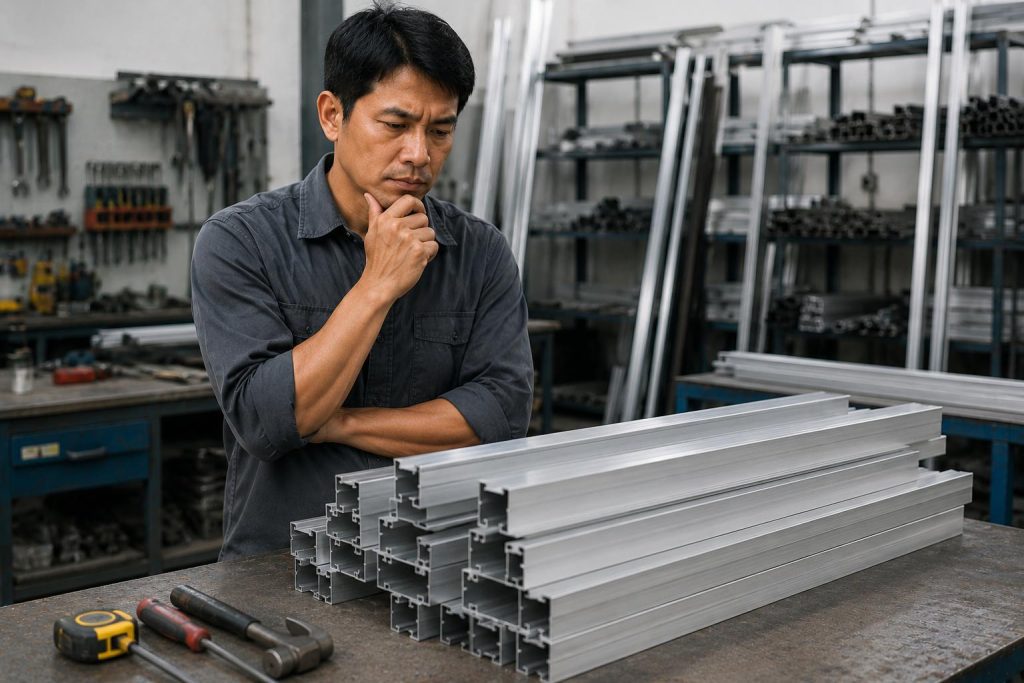
Aluminium naturally forms a thin oxide layer when exposed to air. While this helps protect the metal, achieving reliable paint adhesion still depends on using the right coating system and proper surface preparation. If you have ever tried to paint an aluminium gate, window frame, or panel, you already know this metal does not behave like steel or timber. Getting a coating to actually stick is the real challenge, and that is exactly what aluminium paint is built to solve.
What Is Aluminium Paint for Aluminium Surfaces
Aluminium paint, in this context, is paint formulated specifically for application directly onto aluminium surfaces. This is not the silver-toned paint some people use to mimic a metallic look on other materials. It is a coating engineered to bond with aluminium metal itself, whether that is sheet aluminium, extruded frames, or fabricated panels.
The formulation is built around adhesion. Ordinary automotive or general-purpose paints are not designed with aluminium’s specific surface chemistry in mind, which is why they tend to lift or flake once exposed to weather, vibration, or handling.
Why Is Aluminium Difficult to Paint
Aluminium is difficult to paint because it forms a natural oxide layer almost instantly when exposed to air, and that layer does not grip conventional coatings well. The moment raw aluminium touches oxygen, a microscopically thin oxide film forms on the surface. Most standard paints were never designed to bond with this layer, so they end up sitting loosely on top rather than adhering properly.
Aluminium behaves differently from steel and requires a coating system compatible with its surface characteristics. Proper cleaning and surface preparation are therefore important for achieving reliable adhesion. Aluminium’s smoother, more chemically inert surface needs a paint system that is chemically matched to it, not just applied and hoped for the best.
Can You Paint Aluminium Without Primer
Yes, LENC’s direct-to-aluminium coating is formulated for application directly onto properly prepared aluminium without requiring a separate primer. The paint is designed to bond directly with the metal, which removes one full step from the painting process.
This matters more than it sounds. A typical multi-coat system means buying separate primer coats, waiting for cure times between layers, and managing an extra product in your workflow. Cutting that step out saves material cost and shortens the time between prep and finish, which adds up quickly on larger jobs like railings, structural frames, or fabricated panels.
Surface preparation still matters here. The paint’s strong adhesion depends on the aluminium being properly cleaned and prepared beforehand, so that step stays essential even without a separate primer coat (we cover exactly what that prep looks like further down).
Direct-to-Aluminium Paint with Strong Adhesion
The core selling point of a direct-to-aluminium paint is adhesion strength, since that is the one property standard paints consistently fail at on this metal. LENC Aluminium Paint is formulated to grip the metal directly, without relying on a primer layer to bridge the gap between metal and topcoat.
For anyone who has dealt with peeling or bubbling paint on an aluminium gate, shopfront, or fixture, this is the difference that actually matters. A coating that bonds properly at the surface level holds up far longer under everyday wear than one that is only sitting on top of the metal.
Matt, Gloss and Custom Colour Options
LENC Aluminium Paint is available in custom colours with matt or gloss finish options, allowing the coating appearance to be tailored to different project requirements. That flexibility matters for anything from a single custom-coloured gate to a batch of fabricated panels that need to match an existing colour scheme.
A quick way to think about which finish suits your project:
Finish
Best Suited For
Gloss
Surfaces where a polished, reflective look is wanted, such as decorative panels or fixtures
Matt
Surfaces where glare or fingerprint marks are a concern, such as railings or high-touch frames
Custom colour
Projects that need to match branding, existing structures, or a specific design spec
Scratch and UV Resistance
LENC Aluminium Paint offers good scratch resistance and UV resistance, making it suitable for outdoor exposure. Aluminium fixtures often sit in places that take a beating: gates that get bumped, frames that get cleaned regularly, railings brushed against daily. A coating with weak scratch resistance shows wear fast in those conditions.
UV resistance matters just as much, particularly under Malaysia’s year-round sun exposure. Paint that fades or chalks quickly under UV stress ends up needing a repaint far sooner than it should, which defeats the purpose of choosing a durable coating in the first place.
How to Prepare Aluminium Before Painting
Proper surface preparation is what makes the no-primer approach work, so it is not a step to rush. Here is what preparing aluminium for direct-to-metal painting generally involves:
Clean the surface thoroughly to remove oils, dust, and any residue from handling or fabrication.
Remove any existing oxidation or contamination so the paint is bonding to clean aluminium, not a weak oxide layer.
Lightly abrade the surface where needed to give the paint a better mechanical key.
Make sure the surface is fully dry before application, since trapped moisture can compromise adhesion.
Skipping or rushing any of these steps is one of the most common reasons a coating fails early, even with a paint designed for direct adhesion.
Where Can Aluminium Paint Be Used
LENC Aluminium paint suits any properly prepared aluminium surface that needs a durable, direct-adhering coating, from gates and window frames to fabricated panels and fixtures. Aluminium shows up well beyond automotive applications too, in furniture fittings, construction elements, and industrial fabrication work.
If your project involves aluminium components that need a specific colour match or a finish that can handle daily handling and outdoor exposure, this is the category of paint built for exactly that job.
Frequently Asked Questions
Do I Still Need to Sand Aluminium Before Painting?
Yes. Light abrasion is part of standard surface preparation for direct-to-aluminium paint, even though a separate primer coat is not required. Sanding helps the paint key into the surface rather than just sitting on top of it.
Is Aluminium Paint the Same as Metallic Silver Paint?
Not necessarily. The term “aluminium paint” can sometimes refer to metallic paint containing aluminium pigments. In this article, however, we use it to describe paint specifically formulated for application on aluminium surfaces. LENC Aluminium Paint can be customised in a wide range of colours and is not limited to silver or metallic finishes.
Does Aluminium Paint Have to Be Silver?
No. LENC Aluminium Paint is formulated for application on aluminium surfaces and is not limited to silver. It can be customised in a wide range of solid and metallic colours, with matt or gloss finish options depending on the required appearance.
Can Aluminium Paint Be Used Outdoors?
Yes. LENC Aluminium paint formulated for outdoor use is UV resistant and suitable for gates, railings, frames, and other fixtures that sit outside year-round.
What Finish Options Are Available?
LENC Aluminium paint typically comes in matt or gloss finishes, and custom colour matching is often possible depending on the manufacturer and project.
Getting the Right Finish on Your Aluminium Project
Painting aluminium well comes down to matching the coating to what the metal actually needs, not treating it like any other surface. A paint that bonds directly to properly prepared aluminium, skips the extra primer step, and holds up against scratches and UV exposure solves the exact problems that make aluminium frustrating to paint in the first place.
If you are planning a project that involves aluminium gates, frames, panels, or fixtures, it is worth confirming the paint you pick is actually formulated for direct application on aluminium before you start prep work. Getting the LENC Aluminium Paint System right from the start saves you from redoing the job a year later.
Anda baru je nak repaint motor, tapi bila tanya kedai, mereka sebut pelbagai istilah, aerosol, 2K, cat oven. Semua nampak macam cat je, tapi hasilnya jauh berbeza. Pilih jenis yang salah, dan anda mungkin dapat kerja cat yang cepat pudar atau kasar bila kena hujan panas Malaysia.
Setiap jenis cat kenderaan ini direka untuk kegunaan berbeza, dari touch-up kecil di rumah sampai respray penuh di bengkel profesional. Dalam artikel ini, kita tengok apa beza aerosol, 2K, dan cat oven, supaya anda boleh buat keputusan yang betul untuk motor anda.
Apa Itu Cat Aerosol?
Cat aerosol ialah cat dalam tin semburan yang boleh terus digunakan tanpa perlu campur apa-apa bahan. Ia yang paling senang nak dapat, boleh beli kat kedai aksesori atau hardware berdekatan, dan sesuai untuk kerja kecil-kecilan.
Ramai guna cat aerosol untuk baiki calar kecil, touch-up bahagian tangki, atau cat semula rim. Sebab tak perlu mixing atau spray gun, sesiapa pun boleh cuba sendiri di rumah.
Tapi kelemahannya pun jelas. Lapisan cat aerosol biasanya lebih nipis dan kurang tahan lasak berbanding cat profesional. Warna pun kadang tak match 100 peratus dengan warna asal motor, terutama untuk warna metalik atau pearl yang perlukan color matching yang tepat.
Bila Sesuai Guna Cat Aerosol
Cat aerosol paling sesuai untuk kerja kecil yang tak melibatkan permukaan luas. Kalau calar tu kecil je, atau anda cuma nak refresh rim dan bahagian dalam enjin, aerosol dah memadai.
Untuk respray penuh sebuah motor atau bahagian besar seperti tangki dan fairing, aerosol bukan pilihan yang praktikal. Hasil akhir biasanya tak sekemas kerja yang guna spray gun dan sistem cat berlapis.
Apa Itu Cat 2K?
Cat 2K, atau two-component paint, merujuk kepada sistem salutan yang menggunakan dua komponen yang dicampurkan sebelum aplikasi, biasanya komponen cat atau resin bersama hardener. Selepas dicampur, kedua-duanya bertindak balas secara kimia untuk menghasilkan lapisan yang lebih keras, lebih tahan calar dan lebih tahan lama
Ini sebab kenapa 2K jadi pilihan utama di kebanyakan bengkel respray profesional di Malaysia. Prosesnya memang lebih rumit berbanding aerosol, perlukan spray gun, ruang spray booth, dan kepakaran mixing yang tepat, tapi hasil akhirnya jauh lebih kemas dan tahan lama.
Di LENC, kami hasilkan siri 2K 汽车光油 Clear Coats yang direka khas untuk cuaca tropika Malaysia. Di LENC, kami menghasilkan siri HALO 2K Clear Coats yang direka untuk kegunaan refinishing profesional dalam cuaca tropika Malaysia. Formulasi tertentu dalam rangkaian HALO menawarkan lebih 30% peningkatan tahap kilauan, di samping aliran yang baik dan proses polishing yang lebih mudah untuk membantu bengkel mencapai kemasan berkualiti tinggi dengan lebih efisien.
Kelebihan Sistem Cat 2K
Sistem 2K profesional, khususnya 2K clear coat, boleh memberikan tahap kilauan, kekerasan dan ketahanan cuaca yang tinggi apabila digunakan mengikut sistem dan spesifikasi yang betul. Ia sesuai untuk kerja refinishing yang memerlukan kemasan berkualiti tinggi dan ketahanan jangka panjang.
Proses ini juga perlukan primer yang sesuai sebelum lapisan basecoat dan clear coat disembur. Rangkaian 汽车底漆 Primercoats kami direka untuk pastikan permukaan logam melekat dengan baik sebelum proses pengecatan seterusnya.
Apa Itu Cat Oven?
Istilah “cat oven” biasanya merujuk kepada proses pengeringan atau curing cat menggunakan haba terkawal di dalam spray booth atau baking booth selepas proses semburan. Ia bukan satu jenis cat yang berasingan, dan sistem 2K juga boleh dikeringkan sama ada secara air dry atau dengan bantuan haba, bergantung pada formulasi produk.Kelebihan utama cat oven ialah kelajuan dan kualiti hasil akhir. Proses pengeringan yang biasanya ambil masa berjam-jam pada suhu bilik, boleh disiapkan dalam masa lebih singkat dalam oven. Lapisan cat juga jadi lebih rata dan bebas dari habuk kerana disembur dan dikeringkan dalam ruang tertutup.
Sebab tu, bengkel yang ada kemudahan spray booth dan oven biasanya caj lebih tinggi untuk servis respray. Tapi bagi ramai pemilik motor, kos tambahan ini berbaloi kerana hasil akhir yang jauh lebih tahan lama dan kemas.
Cat Oven vs Cat Kering Udara
Kelebihan utama penggunaan baking booth (Cat Oven) ialah masa pengeringan yang lebih terkawal dan lebih singkat. Suhu yang dikawal membantu mempercepat proses curing bagi produk yang memang direka untuk kaedah tersebut, sekali gus membolehkan bengkel meneruskan proses seterusnya dengan lebih cepat.
Spray booth yang bersih dan terkawal juga membantu mengurangkan risiko habuk dan pencemaran semasa proses aplikasi dan pengeringan.
Perbandingan Ringkas Jenis Cat Motor
Jenis Cat
Kegunaan Terbaik
Ciri Utama
Kos
Aerosol
Touch-up kecil, calar ringan
Mudah digunakan, sesuai untuk kerja ringan
Murah
2K
Respray, kerja profesional
Kemasan dan ketahanan tinggi bergantung pada sistem produk
Sederhana ke tinggi
Cat Oven (dengan 2K)
Kerja profesional yang perlukan curing lebih cepat
Masa curing lebih terkawal dan turnaround lebih pantas
Tinggi
Jadual ni bagi gambaran am je. Pilihan sebenar bergantung pada kegunaan, ciri utama, dan bajet anda nak lapisan cat tu kekal cantik.
Jadi, Jenis Cat Mana Yang Sesuai Untuk Anda?
Kalau calar tu kecil dan anda cuma nak baiki sendiri, cat aerosol dah cukup. Tapi untuk respray penuh atau kerja yang memerlukan kemasan lebih profesional dan tahan lama, sistem refinishing 2K yang digunakan dengan betul biasanya menjadi pilihan yang lebih sesuai. Jika bengkel mempunyai kemudahan baking booth dan produk yang digunakan menyokong proses bake curing, masa pengeringan juga boleh dipercepatkan. Yang penting, pastikan bengkel yang anda pilih guna bahan yang direka khas untuk keadaan cuaca Malaysia, bukan sekadar cat generik. Kalau anda seorang pemilik bengkel atau pengedar yang nak tahu lebih lanjut pasal produk HALO kami, jangan segan hubungi pasukan kami untuk cadangan sistem cat yang paling sesuai dengan keperluan anda.
Ask any experienced spray painter what separates a paint job that lasts from one that peels, fades, or chips within a year, and they’ll point to the same thing: surface prep and priming. The primer coat is the layer most car owners never think about because they never see it. But it’s one of the most important steps in the entire refinishing process.
This article covers what a primer coat actually is, what it does, the different types you’ll come across in a professional workshop, and why skipping it is one of the costliest shortcuts in automotive painting.
What Is a Primer Coat in Automotive Painting?
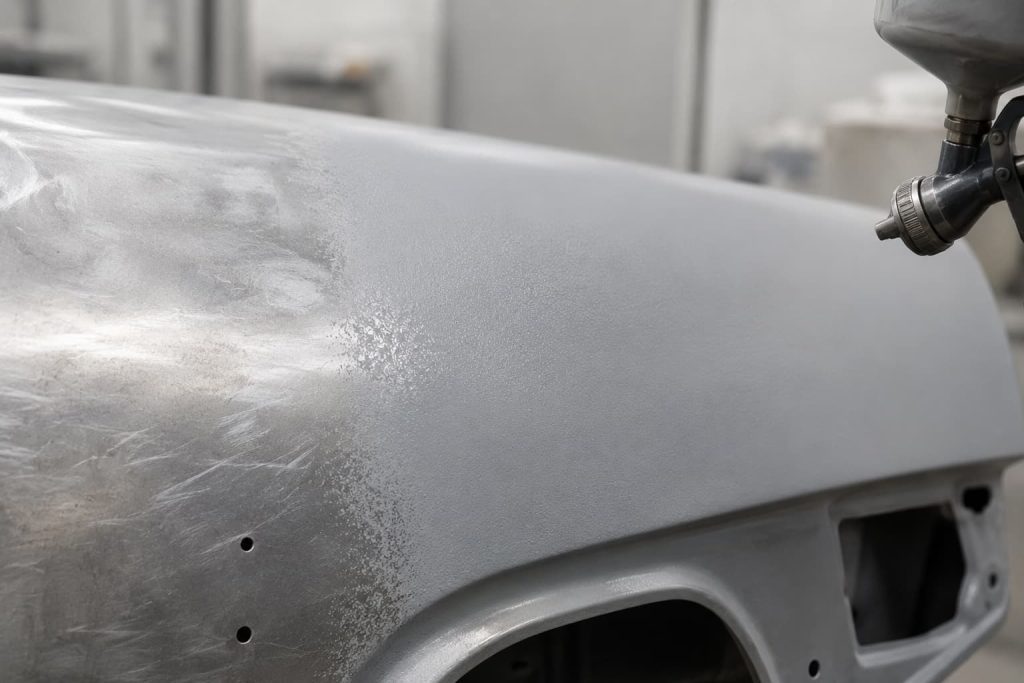
A primer coat is a preparatory coating applied directly to bare metal, body filler, or a sanded surface before the basecoat goes on. Its main job is to create a stable, clean foundation that the colour layer can grip onto properly.
Without primer, basecoat applied directly to bare metal or filler would have inconsistent adhesion, absorb unevenly, and show every imperfection underneath. The surface would also be vulnerable to rust and corrosion from moisture working its way through microscopic gaps in the topcoat.
Primer solves all of that. It seals the surface, evens out texture, promotes adhesion, and in many formulations, actively resists rust. Nobody sees it once the colour goes on, but everything above it depends on it.
Primer isn’t just a filler for scratches, though it handles that too. It does several things at once:
Adhesion promotion: Primer chemically bonds to the substrate beneath it and mechanically keys into the surface through sanding, giving the basecoat a far better grip than it would have on bare metal or plastic.
Surface levelling: Fine scratches, sanding marks, and minor surface imperfections get filled and smoothed out during the primer stage, so they don’t telegraph through to the colour coat.
Corrosion protection: Many primer formulations contain anti-corrosive pigments that actively resist rust formation, particularly important on bare metal panels or areas where old paint has been stripped back.
Sealing: Primer seals porous substrates like body filler and bare metal so the basecoat absorbs evenly. Uneven absorption leads to colour variation and patchy finishes.
Types of Primer Used in Professional Workshops
Not all primers are the same product. Different jobs call for different types, and using the wrong one affects how the rest of the paint system performs.
1. Primer Surfacer
This is the most commonly used type in bodywork and respray jobs. Primer surfacer has a higher solids content, which means it fills in sanding scratches, minor surface irregularities, and low spots. Once dry, it can be wet-sanded to a smooth, flat surface that’s ready for colour.
Primer surfacer is typically the go-to after body filler work, panel repairs, or anywhere the surface has texture that needs to be levelled before painting.
2. Etch Primer
Etch primer is designed for bare metal. It contains acid that lightly etches into the metal surface, creating a mechanical bond that regular primer surfacer can’t match. This is the first coat that goes on when you’re dealing with stripped panels or freshly fabricated metalwork.
It’s thin and doesn’t fill much, so it’s usually followed by a coat of primer surfacer before the basecoat. Think of it as the foundation under the foundation.
3. Sealer / Primer Sealer
A sealer goes on as the final step before basecoat. Its job is to lock in the layers below, prevent bleed-through from old finishes or stains, and create a uniform colour base that helps the topcoat go on evenly with fewer coats needed.
Sealers are especially useful on repairs where you’re painting over an existing finish. They stop the old paint chemistry from reacting with or contaminating the new system.
4. High-Build Primer
High-build primer contains a very high solids content, even more than standard primer surfacer. It’s used when there’s significant surface texture to fill, such as after heavy sanding, deep scratches, or rust repair work. It builds up quickly and can be blocked flat to remove deeper imperfections that a standard surfacer wouldn’t fully fill.
Primer Coat vs. No Primer: What Actually Happens
Some workshops skip primer on quick repair jobs to save time. It costs time later. Here’s what you’re risking:
What Gets Skipped
The Consequence
Adhesion layer
Paint peels or chips sooner, especially around edges and stone chips
Surface levelling
Sanding marks and texture show through the colour coat
Corrosion barrier
Moisture reaches bare metal and rust develops under the paint
Sealing
Basecoat absorbs unevenly, causing patchy or inconsistent colour
A respray done without proper priming might look acceptable in the first few weeks. Give it six months of Malaysian heat and humidity, and the problems start to show. Paint that lifts at the edges, rust spots appearing under the surface, colour that looks inconsistent in direct sunlight.
How Primer Coat Is Applied
The application process matters just as much as the product itself.
1. Surface Preparation Before Primer
The surface needs to be clean, dry, and properly sanded before primer goes on. Any grease, silicone, or contamination will cause adhesion failure regardless of how good the primer is. A wax and grease remover is standard before any primer application.
For bare metal, a light scuff with fine abrasive or a dedicated etch primer treatment ensures the best possible bond. Body filler should be fully cured and sanded to shape before priming.
2. Mixing and Application
Most professional primer coats are two-component products, mixed with a hardener before use. The mix ratio is on the product data sheet and needs to be followed precisely. Too much hardener and the primer becomes brittle. Too little and it won’t cure properly.
Our HALO primer coat range is formulated for consistent application in workshop conditions, with clear mix ratios and good build in fewer coats so your team isn’t spending extra time on the spray booth.
Spray primer in even, overlapping passes at the correct distance from the panel, typically 20 to 25 cm depending on the gun setup. Apply two to three coats with flash-off time between each, and allow full cure before sanding.
3. Sanding the Primer
Once the primer has cured, it gets wet-sanded to flatten the surface and remove any dust nibs or orange peel before the basecoat goes on. The grit used depends on the primer type and the condition of the surface, typically between 400 and 600 grit for final flatting.
This sanding step is what turns a primed panel into a surface smooth enough for colour. Don’t rush it.
Primer Compatibility with the Rest of Your Paint System
One thing that catches workshops out is using primer from one brand with topcoat products from another without checking compatibility. Paint systems are formulated to work together. The primer, basecoat, and clear coat are all designed with compatible chemistry so each layer bonds correctly to the one beneath it.
Mixing incompatible products can cause lifting, solvent attack, or adhesion failure, sometimes immediately, sometimes weeks later when the job is already back at the customer. Using the right automotive thinner for reduction also matters here, as the wrong thinner can affect how the primer flows and cures.
At LENC Paints, our primer coats are part of a complete HALO system that includes basecoats and 2K clear coats, all developed to work together. When you use the full system, you’re not guessing at compatibility. Everything is tested to perform as a unit.
When Does a Car Actually Need Re-Priming?
Not every paint job requires stripping back to bare metal and starting from scratch. But there are situations where proper re-priming is non-negotiable:
Panel replacement or new bare metal work
Collision repair where filler has been applied
Rust repair where the affected area has been ground back
Full resprays where the old finish is too far gone to paint over
Spot repairs where the existing primer has been sanded through
For lighter work, like a scuff repair on an otherwise sound panel, a sealer over the lightly prepared existing finish might be sufficient. The key is having a painter who can read the surface and make the right call.
If you want to understand how primer fits into the full job from start to finish, our article on what a car respray involves walks through the complete process step by step.
The Bottom Line on Primer
Primer isn’t exciting. Nobody orders a car respray because they want a great primer job. But it’s the layer that holds everything else together, and a good primer application is what lets the colour coat and clear coat do their jobs properly for years rather than months.
If you’re a workshop looking to upgrade the primer products you’re using, or a distributor interested in stocking a complete refinishing system, get in touch with us today. We’re happy to walk you through the right products for your workflow.
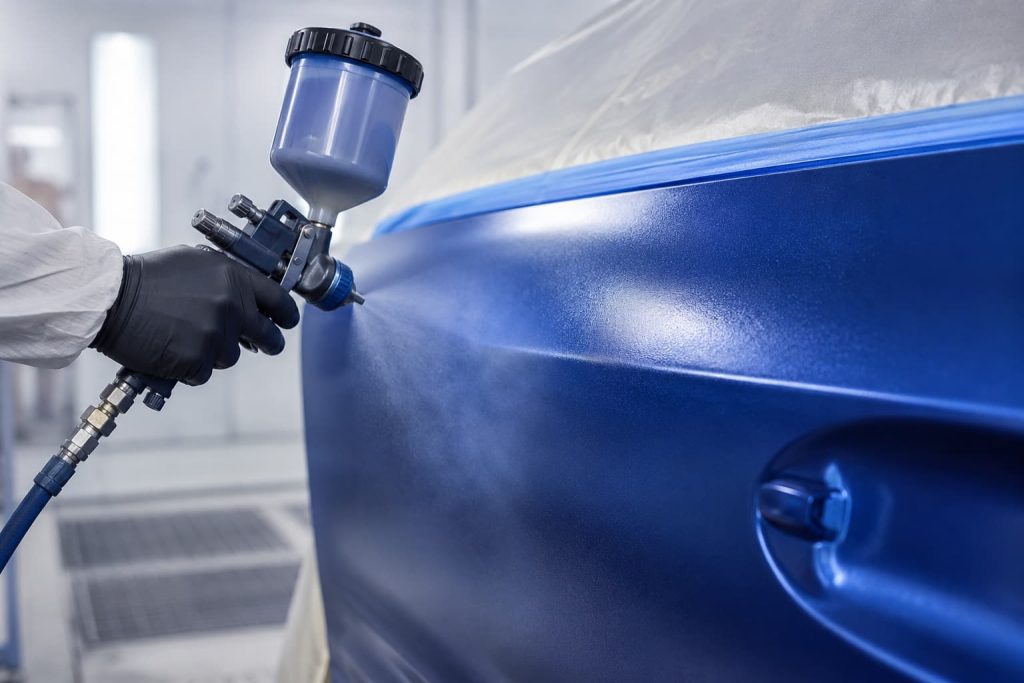
When you look at a freshly resprayed car and admire the colour, you’re looking at the basecoat. It’s the layer that carries the colour, the depth, and the visual character of the finish. Not the primer underneath it, and not the clear coat on top. The basecoat is where all the colour work happens.
If you’re a workshop owner, a technician, or just someone who wants to understand what actually goes into a professional paint job, this article breaks down what basecoat is, the different types you’ll encounter in the industry, and how it gets applied properly.
What Basecoat Actually Does in a Car Paint System
Basecoat is the colour layer in a modern automotive paint system. It sits between the primer (which prepares the surface) and the clear coat (which protects and adds gloss). On its own, basecoat has very little surface protection. It’s not designed to be tough. Its job is colour delivery, and it does that very well.
This is why you’ll almost never see a bare basecoat finish in professional work. It needs a clear coat on top to protect it from UV rays, abrasion, humidity, and everything else Malaysian weather throws at a vehicle. The two work as a system, and skipping either one compromises the whole job.
Not all basecoats are the same. The type you choose affects colour accuracy, application behaviour, drying time, and overall finish quality. Here are the main types used in professional automotive refinishing:
1. Solvent-Based Basecoat
Solvent-based (also called conventional) basecoats have been the industry standard for decades, and they’re still widely used across Malaysian workshops. They deliver excellent colour depth and opacity, they’re forgiving to spray, and they dry relatively fast.
The main trade-off is VOC (volatile organic compound) content. Solvent-based products release more emissions during application, which is why spray booth ventilation matters. Despite tightening environmental standards in some markets, solvent-based basecoats remain the practical choice for most professional bodyshops in this region due to performance and cost.
2. Water-Based Basecoat
Water-based basecoats use water as the primary carrier instead of solvents. They’re cleaner environmentally and produce lower VOC emissions. Many car manufacturers now specify water-based paints for their OEM production lines.
For refinishing work, water-based products require a bit more care. They’re sensitive to humidity and temperature during application, and they typically need an infrared dryer or a well-ventilated booth to flash off properly. In tropical conditions like Malaysia’s, these environmental factors matter more than they would in a temperate climate.
We’ve covered the differences between solvent-based and water-based car paint in a separate article if you want a deeper comparison before deciding which direction suits your workshop.
3. Metallic and Pearl Basecoat
These aren’t separate categories by chemistry, but they’re worth distinguishing by visual effect. Metallic basecoats contain aluminium flake particles that reflect light and give the finish its characteristic shimmer. Pearl basecoats use mica or ceramic flakes that create a colour shift depending on the viewing angle.
Spraying these correctly takes more skill. Flake orientation is affected by spray distance, gun pressure, and the number of coats applied. Get it wrong and you’ll see banding, shadowing, or inconsistent flake alignment. Proper technique and consistent passes are everything with metallic and pearl finishes.
4. Solid Colour Basecoat
Solid colours, think white, black, red, or any plain single-tone, don’t contain metallic or pearl flakes. They’re generally easier to apply than effect finishes and are more forgiving of minor technique variations. That said, colour accuracy still matters enormously, especially on partial panel repairs where the new coat needs to match the surrounding paintwork.
What Goes Into a Good Basecoat Product?
The quality of a basecoat comes down to a few things: pigment quality, binder resin, and how the product is formulated for the conditions it’ll be used in. A well-formulated basecoat gives you:
Consistent colour accuracy batch to batch
Good hiding power, meaning fewer coats to reach full opacity
Compatibility with the primers and clear coats in your system
Stable performance in high humidity and heat conditions
At LENC Paints, our HALO basecoat range is developed with in-house R&D specifically for tropical conditions. Colour accuracy is matched against an extensive catalogue, and the formulation is designed to work seamlessly with our 2K clear coats and primer coats, so the whole system performs as intended from the ground up.
How Basecoat Is Applied in a Professional Respray
Here’s how a proper basecoat application typically goes:
1. Surface Preparation Comes First
Basecoat needs a prepared surface to adhere to correctly. In a full respray, this means the panels are sanded, cleaned, and primed before the basecoat ever goes on. Any contamination or unsanded edges will show up in the finish. There are no shortcuts in prep.
2. Mixing and Reduction
Basecoat is almost always mixed with a reducer or thinner to bring it to the right viscosity for spraying. The ratio depends on the product spec sheet, the spray gun you’re using, and to some degree the ambient temperature. Using the right automotive-grade thinner makes a real difference in how the paint lays and flows off the gun.
3. Spraying Technique
Basecoat is typically applied in two to three coats, with a flash-off period between each. Flash-off just means you wait for the solvent or water to evaporate before applying the next layer. Rushing this creates solvent trapping, which causes adhesion problems and can result in blistering down the line.
Keep consistent spray distance (usually around 15 to 20 cm), overlap each pass by about 50%, and maintain a steady gun speed. With metallic or pearl finishes, a final mist coat can help settle the flake orientation evenly.
4. Clear Coat Goes On After
Once the basecoat has fully flashed off and you’re happy with the colour coverage, the 2K clear coat goes on. This is what gives the finish its depth, gloss, and long-term protection. Basecoat without clear coat is incomplete, full stop.
Common Basecoat Problems and What Causes Them
Even experienced painters run into issues. Here are a few of the more common ones:
Problem
Likely Cause
Poor hiding power (patchy colour)
Too few coats, wrong reduction ratio, or low-quality pigment
Metallic banding
Inconsistent gun speed or spray distance
Solvent popping
Insufficient flash-off time between coats
Colour mismatch on panel repairs
Incorrect colour code, poor tinting, or wrong product batch
Adhesion failure
Contaminated surface or incompatible primer system
Most of these come down to either product quality or application process. Using a well-formulated basecoat from a reputable manufacturer and following the correct application procedure eliminates the majority of them.
Wrapping It Up
Basecoat is one layer in a system, and the system only works when every layer does its job. Primer gives the basecoat something to grip. Basecoat delivers the colour. Clear coat protects everything. Skip or shortcut any of these, and the whole thing underperforms.
If you’re a workshop thinking about the products you use, it’s worth evaluating not just basecoat in isolation but the full system compatibility. Products formulated to work together give you more predictable results than mixing brands across layers.
For a full walkthrough of how all of this fits together in an actual job, the article on what is a car respray gives you the complete process from panel prep to final coat.
Whether you’re sourcing basecoat for a single workshop or building out a distribution network, we’re happy to talk through your needs. Check out our range of basecoats 联系我们,或致电 reach out to us !
Running a workshop in Malaysia means dealing with conditions that most global product specs weren’t designed for. The heat doesn’t let up, humidity sits high year-round, and customers expect a mirror-level finish every single time. Choosing the wrong clear coat doesn’t just affect quality. It hits your turnaround time, your rework rate, and eventually, your reputation.
The problem is there’s no shortage of options on the market. Walk into any automotive supply shop and you’ll find products at wildly different price points, all claiming brilliant gloss and long-lasting durability. So how do you cut through all that and actually pick the right one for your workshop?
Here are five things that genuinely matter.
1. UV and Weather Resistance Built for the Malaysian Climate
Malaysia’s climate is relentless. Intense UV exposure, daily heat cycles, and humidity that rarely drops below 70% will degrade a clear coat that wasn’t engineered for it. Yellowing, hazing, and early peeling are the most common failure points for products formulated to general automotive specs rather than tropical conditions.
When evaluating a product, look beyond the brochure claims and check whether the formulation was actually designed for Southeast Asian use. A clear coat that performs well in a European market doesn’t automatically hold up on a Malaysian parking lot at 2pm in July. Moisture-resistant curing and strong UV inhibitors are what you want. Your customers’ resprays need to hold that finish for years, not start fading before their next service.
2. Drying and Processing Time
In a busy workshop, time is one of the tightest resources you manage. A clear coat that takes too long to flash between coats, or too long to cure before buffing, directly affects how many jobs you can complete in a day.
Flash Time vs. Full Cure Time
These are two different measurements and it’s worth understanding both before committing to a product. Flash time is the waiting period between coats. Full cure time is how long before the panel can be safely polished, buffed, or handed back to the customer. A product might advertise a short flash time but have a long cure window, which can be a real problem if your workflow involves same-day delivery on respray jobs.
How Processing Speed Affects Your Workshop Throughput
Cutting your spray processing time by even 20 to 30 percent adds up significantly across a full month of work. Our HALO 2K Clear Coat is formulated to reduce spray processing time by approximately 30% compared to standard products. That’s a meaningful difference when you’re running multiple bays and back-to-back bookings.
3. Gloss Level and Finish Quality
A quality clear coat needs to do two things well: protect the underlying paint and make it look like glass. If your clear is dulling the basecoat beneath it, or leaving noticeable texture after buffing, that’s a problem regardless of what the label says.
Before committing to any new product, spray a test panel first. Evaluate the gloss under different lighting conditions: direct sunlight, your booth lighting, and natural shade. Look for orange peel, cloudiness, or uneven sheen right after application. Issues at this stage are a reliable predictor of problems at scale.
Good levelling properties matter too. A quality clear coat flows out smoothly after application and self-levels before it starts to tack. This means less polishing time after cure and less mechanical abrasion on the paint system overall, which is better for the finish and better for your team’s time.
4. Compatibility With Your Existing Paint System
Clear coats don’t perform in isolation. They’re part of a layered system: primer, basecoat, clear. If any of those layers aren’t compatible with each other, you risk adhesion failure, solvent pop, or lifting. These problems don’t always show up immediately but they create costly rework later, often after the car has already left your shop.
This is why running a unified paint system from a single supplier makes sense for most workshops. When your primer coats, basecoats, and 2K clear coat are all engineered to work together, you take the compatibility guesswork out of the equation. Mixing brands across layers introduces variables that can be genuinely difficult to diagnose when something goes wrong months down the line.
If you’re currently running a mixed-supplier setup, do controlled test panels before committing to any new product combination, especially across primer and clear.
5. Real Cost Efficiency, Not Just Price Per Litre
Cheap clear coats exist. Some of them are usable. But if a low-cost product is quietly increasing your rework rate, the savings don’t add up. What you’re actually looking for is cost efficiency across the full job: coverage rate, how far a litre gets you, rework frequency, and how well the finish holds before customers come back with complaints.
Two-component (2K) clear coats do cost more upfront than 1K options, but the durability difference is real. If you haven’t compared both properly, our article on 2K vs 1K clear coat breaks down exactly what you’re trading off between the two.
Batch-to-batch consistency is another factor worth thinking about. A product manufactured under ISO 9001:2015 certification with in-house R&D means you’re not guessing whether this month’s drum will perform the same as last month’s. Consistency matters when you’re building a reputation on your finish quality.
How To Properly Trial a New Clear Coat Before You Commit
Don’t test a new clear coat on a customer’s car. Use this process instead:
Get a scrap panel or test bonnet
Apply your standard primer and basecoat underneath
Spray the clear at the manufacturer’s recommended mix ratio and flash intervals
Buff and inspect after 24 hours: gloss level, surface texture, cure hardness
Leave the panel outdoors for a week and check for early signs of UV or moisture response
A product that passes this gives you a far more reliable basis for making the switch than spec sheets alone.
Choosing the Right Automotive Clear Coat for Your Workshop
The best clear coat for a Malaysian workshop checks all five boxes: tropical climate durability, processing speed, finish quality, system compatibility, and genuine cost efficiency. No single spec number tells the whole story, and a product that scores well on one but poorly on the rest will show its weaknesses over time.
If you’re looking for a 2K clear coat built specifically for local conditions, our HALO 2K Clear Coat is formulated for exactly that. Designed in Malaysia, backed by ISO certification, and part of a complete paint system that runs from primer through to topcoat.
New to 2K products and want to understand how they work before making a decision? Our guide on understanding 2K clear coat is a good starting point.
Kalau anda pernah tengok proses kerja di bengkel cat kereta, mungkin anda perasan teknisi tu bukan sekadar ambil satu tin cat dan terus sembur. Ada proses, ada lapisan, dan ada jenis cat yang berbeza untuk setiap peringkat kerja.
Inilah yang membezakan bengkel profesional dengan kerja “cucuk” yang tidak tahan lama. Pro guna sistem cat yang betul. Dan sistem tu melibatkan sekurang-kurangnya tiga jenis cat utama yang masing-masing ada fungsi tersendiri.
Kalau anda nak faham kenapa cat bengkel mahal sedikit berbanding cat biasa, atau sekadar ingin tahu apa yang sebenarnya digunakan dalam proses semburan penuh, artikel ini adalah untuk anda.
1. Cat Primer: Asas yang Tentukan Segalanya
Sebelum sebarang warna disembur, permukaan kereta perlu disediakan dengan betul. Di sinilah cat primer memainkan peranan penting, dan ia sering jadi lapisan yang paling dipandang ringan oleh bengkel yang kurang berpengalaman.
Apa Fungsi Cat Primer?
Cat primer bukan sekadar “lapisan pertama”. Ia ada beberapa fungsi utama:
Memastikan cat warna melekat dengan kuat pada permukaan logam atau filler badan
Mengisi permukaan yang tidak rata, calar halus, atau kesan tampalan
Melindungi permukaan logam daripada karat sebelum dicat semula
Memberi asas warna yang seragam supaya warna lapisan atas kelihatan betul dan konsisten
Tanpa primer yang baik, cat warna yang anda sembur selepas tu mungkin tidak melekat dengan sempurna. Atau hasilnya tidak sekata walaupun warna dipilih tepat. Dalam jangka masa panjang, ini boleh menyebabkan cat terangkat, gelembung, atau habis dalam masa yang lebih cepat daripada sepatutnya.
Jenis Primer yang Biasa Digunakan Bengkel Pro
Tidak semua primer sama. Bergantung pada jenis kerja dan keadaan panel, bengkel profesional akan pilih primer yang berbeza:
Epoxy primer untuk perlindungan karat yang lebih baik, terutama pada panel yang telah diketuk atau ada karat awal
Polyester primer surfacer untuk mengisi permukaan yang dalam atau tidak rata selepas tampalan badan
2K primer untuk kerja yang memerlukan adhesion dan filling dalam masa yang sama
Untuk bengkel yang nak keputusan konsisten dan meminimumkan kerja baiki semula, primer coat berkualiti adalah pelaburan yang berbaloi. Jimat pada primer sering bermaksud bayar dua kali pada kerja semula.
2. Basecoat: Lapisan Warna yang Memberi Identiti Kereta
Selepas primer kering dan di-sand dengan betul, barulah cat warna atau basecoat disembur. Ini lapisan yang kelihatan dari luar dan yang memberi kereta tu warnanya. Ia juga lapisan yang paling mudah nampak kalau tidak disembur dengan betul.
Apa Itu Basecoat dan Kenapa Ia Tidak Glossy?
Ini soalan biasa yang sering tanya. Basecoat adalah lapisan warna utama dalam sistem cat dua atau tiga peringkat. Ia tidak mengandungi lacquer atau pelindung, jadi ia tidak glossy dengan sendirinya selepas disembur. Permukaan akan kelihatan matte atau doff selepas basecoat kering.
Kilat tu datang dari clear coat yang disembur di atas. Sebab itulah basecoat perlu disembur dengan sempurna dari segi coverage dan keseragaman warna. Lepas clear coat diaplikasi, semua ketidakseragaman akan kelihatan dengan lebih ketara di bawah cahaya.
Kenapa Color Matching Adalah Kemahiran Tersendiri
Ini satu cabaran besar dalam kerja cat kereta, terutama untuk kerja baiki separa atau satu panel sahaja. Warna kereta yang sama boleh kelihatan berbeza bergantung pada umur cat asal, jenama cat yang digunakan sebelum ni, dan cara cahaya memantul pada sudut yang berbeza.
Bengkel yang serius akan guna sistem basecoat yang ada katalog warna yang luas dan sistem pencocokan warna yang tepat. Ini bukan sekadar pilih warna yang “lebih kurang sama” tapi cari padanan yang betul-betul tepat supaya panel yang dicat tidak kelihatan berbeza daripada panel sebelahnya.
Nak tahu lebih lanjut tentang jenis-jenis cat yang ada di pasaran? Artikel kami tentang jenis cat automotif boleh jadi rujukan berguna.
3. Clear Coat: Pelindung Terakhir yang Tentukan Hasil Akhir
Ini lapisan ketiga dan yang paling kritikal dari segi penampilan akhir dan daya tahan jangka panjang. Clear coat adalah cat telus yang disembur di atas basecoat untuk memberi kilat, perlindungi warna daripada UV, dan tingkatkan ketahanan permukaan kereta.
Kenapa Clear Coat Penting untuk Iklim Malaysia
Malaysia ada iklim yang agak keras untuk cat kereta. UV yang kuat sepanjang tahun, kelembapan tinggi, dan panas yang tidak banyak berubah boleh menjejaskan clear coat yang tidak diformulasi untuk cuaca tropika. Clear coat yang tidak sesuai atau berkualiti rendah boleh menjadi kekuningan, kabur, atau mula pecah dalam masa dua hingga tiga tahun sahaja.
Sebab itulah pemilihan clear coat bukan sekadar soal harga per liter, tapi soal berapa lama kerja anda tahan. Pelanggan yang keretanya menanggalkan clear coat dalam masa dua tahun adalah pelanggan yang tidak akan balik ke bengkel anda.
Perbezaan 1K dan 2K Clear Coat
Satu perkara yang wajib difahami setiap teknisi bengkel adalah perbezaan antara 1K dan 2K clear coat.
1K Clear Coat
2K 光油
Komponen
Satu komponen, sedia sembur
Dua komponen, perlu dicampur dengan hardener
Ketahanan
Lebih rendah
Lebih tinggi
Kilat akhir
Sederhana
Sangat baik
Masa proses
Lebih cepat tapi hasil lemah
Lebih terkawal dan konsisten
Kegunaan biasa
Touch-up kecil
Semburan penuh profesional
Untuk kerja bengkel yang serius, 2K clear coat adalah pilihan standard. Ketahanannya lebih baik, dan hasilnya lebih konsisten dari satu job ke job yang lain. Kalau anda belum familiar dengan perbezaan keduanya, artikel kami tentang 2K vs 1K clear coat boleh bantu jelaskan lebih lanjut.
Kenapa Ketiga-Tiga Jenis Cat Ini Perlu Digunakan Bersama
Soalan yang sering tanya: “Boleh tak terus guna cat warna tanpa primer?” atau “Boleh tak skip clear coat untuk jimat masa?”
Boleh. Tapi risikonya tinggi.
Setiap lapisan dalam sistem cat ada fungsi yang tidak boleh digantikan oleh lapisan lain. Primer pastikan adhesion. Basecoat bagi warna. Clear coat bagi perlindungan dan kilat. Kalau salah satu dilangkau, sistem tu tidak berfungsi sepenuhnya, dan hasilnya akan kelihatan dalam tempoh masa yang lebih cepat daripada yang pelanggan jangkakan.
Yang sama pentingnya, ketiga-tiga produk ini perlu serasi antara satu sama lain. Itulah sebabnya bengkel pro biasanya guna sistem cat dari satu pembekal, bukan campuran pelbagai jenama untuk setiap lapisan. Bila primer, basecoat, dan clear coat diformulasi untuk bekerja bersama, risiko masalah seperti adhesion failure, solvent pop, atau cat terangkat berkurangan dengan ketara.
Artikel kami tentang cat kereta Malaysia juga ada perbincangan lanjut pasal kenapa pemilihan cat yang betul penting dalam konteks pasaran tempatan.
Sistem Cat Pro untuk Bengkel Malaysia
Sistem cat HALO kami direka khas untuk industri automotive refinishing di Malaysia. Dari primer hingga basecoat hingga 2K clear coat, setiap produk diformulasi untuk bekerja bersama dan tahan dalam iklim tropika. Lebih dari 500 bengkel di Malaysia sudah guna produk HALO dan AURORA kami dalam kerja harian mereka.
Kalau anda sedang pertimbangkan untuk tukar ke sistem cat yang lebih konsisten dan boleh dipercayai, atau nak tahu lebih lanjut tentang perbezaan antara cat berasaskan pelarut dan cat berasaskan air, kami ada sumber yang boleh bantu anda buat keputusan yang lebih yakin.